Does this happen to you?
When one difficult moment keeps taking up too much space.
Maybe it is what happens after that moment, feedback, silence, mistake or conflict lands in your body.
- You replay conversations long after everyone else has moved on.
- You read a short reply and immediately wonder whether you have done something wrong.
- You receive feedback and feel your confidence disappear before you have processed what was actually said.
- You feel urgency to explain, apologise, fix or get reassurance straight away.
- You withdraw, procrastinate or lose momentum after feeling criticised, embarrassed or exposed.
- You turn one difficult moment into evidence that you are too much, not good enough or about to be rejected.
- You are exhausted from trying to think your way out of feelings your body has not finished processing.
You are not too sensitive.
You are exhausted from recovering alone.
Why this can feel so hard
“Just do not take it personally” is not a practical plan for what to do next.
When insight is not enough
You do not need to argue yourself out of the feeling.
You need a pause, practical support for the body response and a way to decide what matters before you react.

You can understand something logically and still feel it everywhere in your body.
You may know a delayed reply is not proof someone dislikes you. You may know feedback does not define your worth. You may know one awkward moment does not mean you have ruined everything.
But your body can still react as though something important is at risk. You might feel urgency to fix it, explain yourself, withdraw, chase reassurance or replay the moment until you feel safe again.
That is why insight alone is often not enough. You need a practical way to meet the emotional aftermath, not another reason to criticise yourself for having it.
The goal is not to make you harder.
The goal is to help you feel more supported, more resourced and more able to stay connected to yourself when something hurts.
When rejection sensitivity affects work
When feedback, silence or a small mistake follows you home.
Rejection sensitivity at work can look like replaying a meeting for hours, panicking after a short message from a manager, feeling exposed after sharing an idea or losing momentum after a mistake others may have already moved on from.
- Feedback that feels personal Separate useful information from self-attack before deciding what to do next.
- Silence and uncertainty Use facts, feelings and story tools when a delayed reply or changed tone starts becoming a verdict on your worth.
- Mistakes and visibility Create a gentler recovery pathway for moments you feel embarrassed, exposed or tempted to withdraw after something goes wrong.
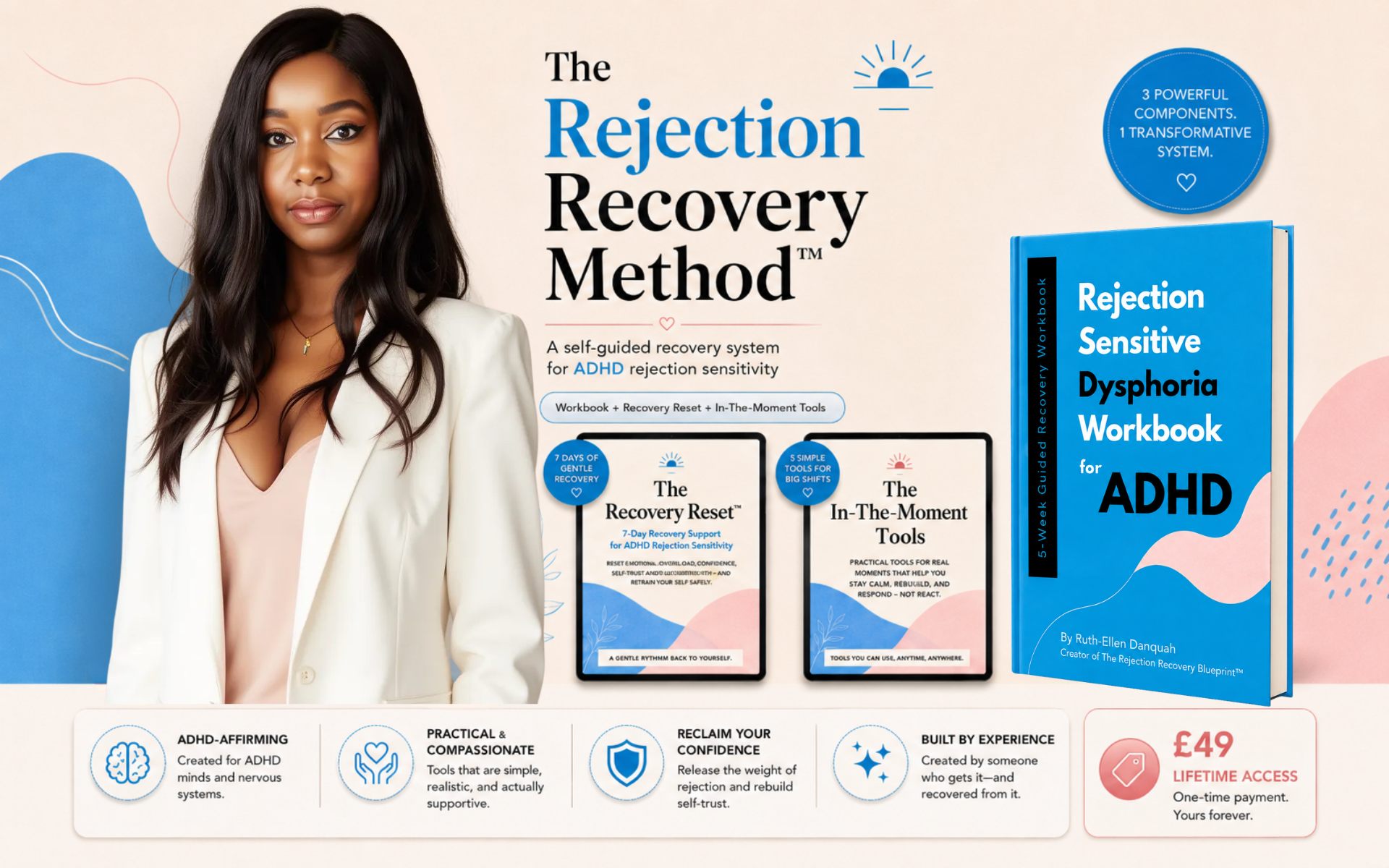
This is where the Rejection Recovery Method™ comes in
A practical way to recover without losing days to the spiral.
When rejection, feedback, silence or self-doubt hits, you do not need more pressure to “get over it.”
You need support that helps you pause, understand what is happening and return to yourself before panic, self-attack or overthinking takes over.
One payment · Immediate access · Return whenever you need support
What is inside
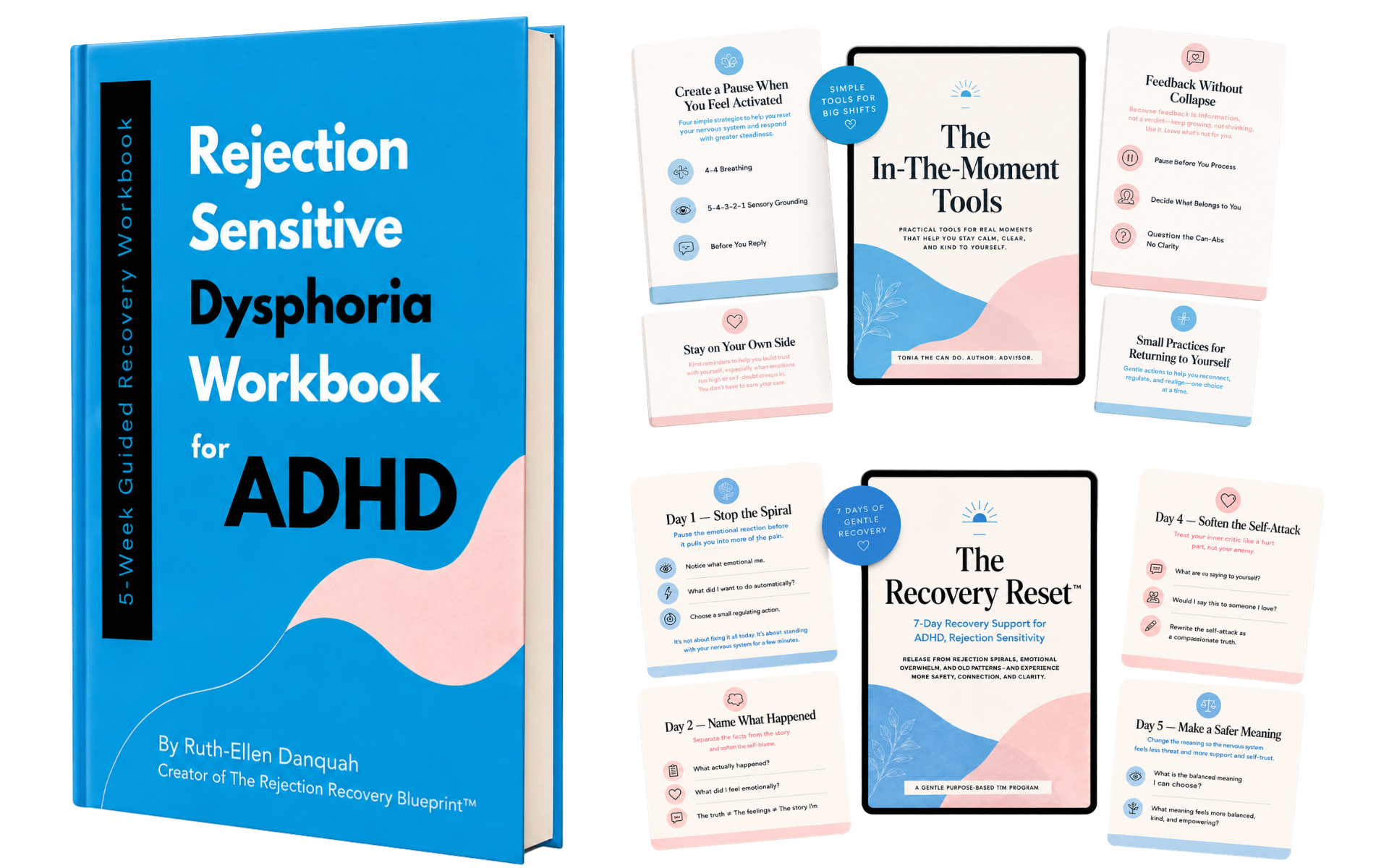
Three ways back to yourself, depending on what you need today.
A Guided Workbook for ADHD
A structured workbook for recognising patterns, processing emotional setbacks and building more self-trust over time.
The Recovery Reset™
A seven-day guided pathway for when rejection has just happened and you need help moving through the immediate aftermath.
In-The-Moment Tools
Instant-access tools for grounding, self-compassion, feedback, boundaries and choosing your next step.
The 5-week guided recovery workbook
A clear pathway without pressure to do it perfectly.
This is a structure to return to, not another standard you have to meet. Take longer than five weeks. Repeat sections. Use lower-energy practices. It still counts.
Notice the pattern
Identify triggers, body signals, automatic thoughts and protective responses that make rejection spirals feel bigger.
Support regulation
Use gentle body-based and reflective tools that help create a pause before you react, reply or make meaning.
Build recovery habits
Create small, realistic practices that support recovery after difficult moments without demanding instant emotional perfection.
Relationships and boundaries
Explore communication, needs, self-respect and boundaries when fear of rejection makes connection feel risky.
Create your personal recovery plan
Bring together what helps you pause, what supports your body and what helps you return to yourself next time something difficult lands.
Imagine this instead
The feedback lands.The message is delayed. Someone says no. But you do not lose yourself.
You may still feel it. This is not about becoming emotionless. It is about having a pathway back to yourself before panic, shame or self-attack makes every decision.
You notice sooner
You recognise the early signs of activation before the spiral has taken over your whole day.
You pause more often
You create space before replying, explaining, disappearing or deciding what something means.
You return more gently
You spend less time attacking yourself for having feelings and more time finding a supportive way back.
The investment
Not another PDF you download, skim once and forget.
This is a recovery system you can return to after feedback, difficult conversations, conflict, silence, work stress, dating triggers, family tension or any moment rejection sensitivity starts taking over.
- 5-Week Guided Recovery Workbook
- The Recovery Reset™: 7 days of guided emotional support
- In-The-Moment Tools for grounding, feedback, boundaries and self-compassion
- Body Scan Meditation and Rejection Sensitivity Hypnosis Audio
- Your personal Rejection Recovery Plan™
- Ongoing access in your private resource space
Before you decide
You may be wondering…
What if I cannot keep up?
The five-week structure is a pathway, not a deadline. Use what helps, pause when you need to and return gently.
What if I have tried journals before?
This combines guided reflection, recovery structure, practical tools and audio support for different stages of activation.
What if the emotions feel too intense?
Go slower. Use grounding or audio support, skip exercises that feel too much and choose lower-energy practices.
Is this therapy or treatment?
No. This is an educational, coaching-based self-support resource. It does not replace therapy, medical advice, diagnosis or crisis support.
Do I need an ADHD diagnosis?
No. It is designed with ADHD and neurodivergent experiences in mind, but you do not need a diagnosis to use it.
What happens after purchase?
You create your private profile and receive access to the Workbook, Recovery Reset™ and In-The-Moment Tools straight away.
Start here
You do not have to keep recovering from rejection alone.
The next difficult moment may still hurt. But you can meet it with more support than panic, self-attack or another night spent replaying what happened.
Get the Rejection Recovery Method — £49Immediate access · Work at your own pace · Return whenever you need support
