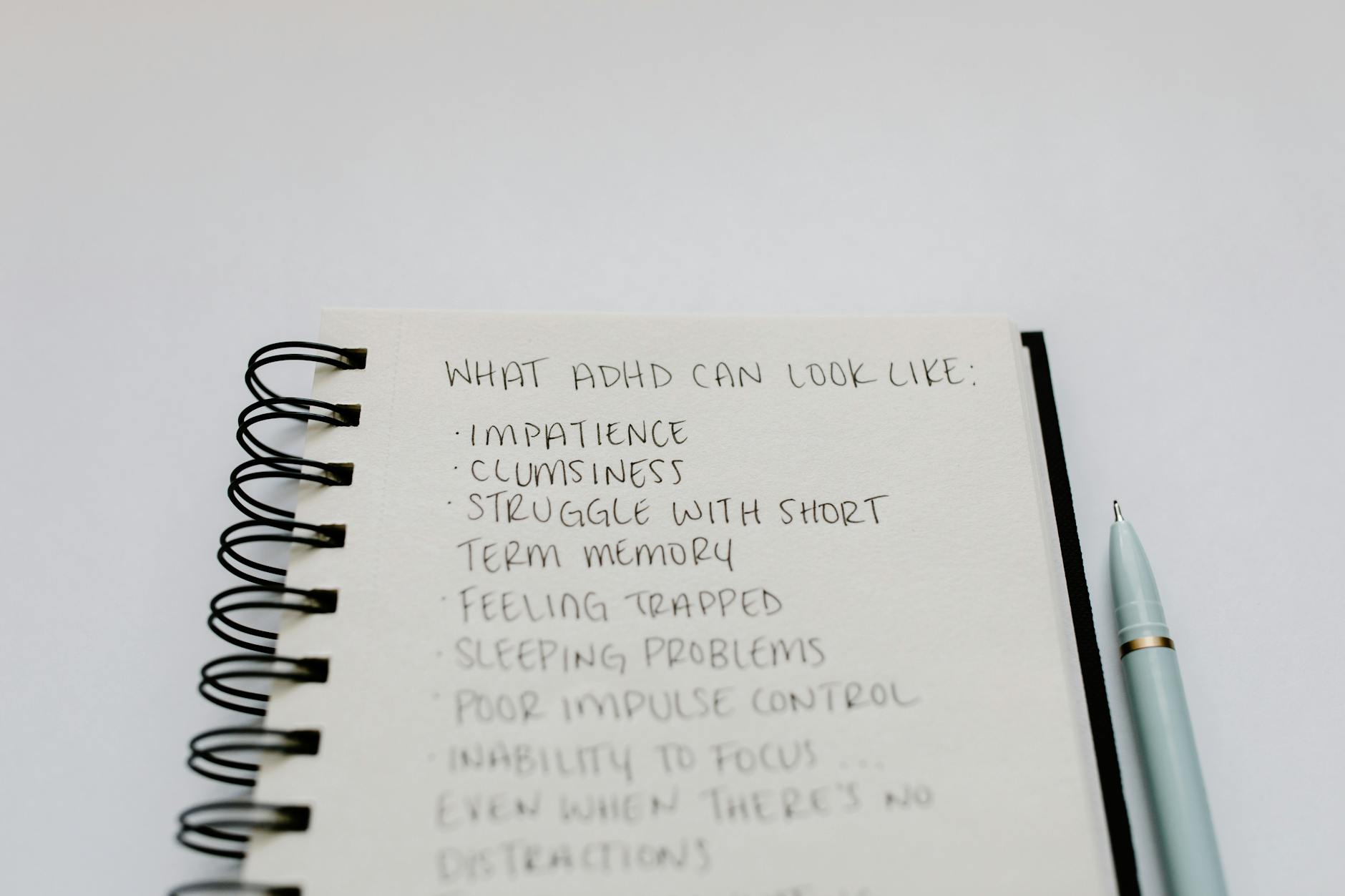
ADHD & Social Media & The Scroll Spiral

Why Social Media Feels Like A Time-Sucking Black Hole (And The One Rule That Gets You Out)

Let’s talk about ADHD & social media

You know that moment when you open Instagram just to check your DMs…

And suddenly it’s 45 minutes later.

Your energy’s gone.
Your brain feels foggy.
Your ideas feel like they’ve evaporated.

You close the app feeling smaller than when you opened it.

This isn’t you being bad at boundaries.
This isn’t laziness or lack of discipline.

This is social media doing exactly what it was designed to do — and your ADHD brain responding exactly as it’s built.

The Myth:

“Just get off your phone. Set better limits. Use screen time blockers.”

Sounds good in theory.

But for ADHD entrepreneurs?

That advice completely ignores the real issue.

ADHD & Social Media

The Truth:

ADHD brains aren’t struggling because of “bad habits.”

They’re struggling because social media is built to:
→ Hijack your dopamine pathways
→ Bypass your time awareness
→ Flood you with novelty, comparison, and distraction triggers

And ADHD brains?
We’re wired to chase novelty + reward faster than neurotypical brains.

Not because we’re weak.
Because we’re built to seek stimulation, pattern recognition, and connection.

Social media preys on that.

What Happens In The Scroll Spiral:

→ You open the app with a purpose (DM check, content post).
→ The feed catches you.
→ You see someone doing what you do — only “better.”
→ You feel behind.
→ You question everything you’ve been working on.
→ You close the app feeling depleted and stuck.

This isn’t a mindset problem.

This is a system design problem.

ADHD-Friendly Social Media Isn’t About “Willpower.”

It’s about pre-deciding:
→ Your purpose before you open the app
→ Your exit plan before the scroll starts
→ Your visibility system so you don’t have to hang out online to get clients

This is exactly what we build inside Scaling Simplified™ with AI.

Not just content plans.

But nervous-system-safe visibility systems designed for:
→ Foggy brain days
→ Low energy days
→ Distraction-heavy environments

What This Looks Like Practically:

→ Pre-written content banks so you never start from zero
→ Follow-up automation that remembers for you
→ Closed-loop content rituals (so you can post + leave with pride)
→ Offer pathways that invite people to work with you while you rest

The One Thing I Want You To Try Today:

Before you open social media — ask yourself:

“What am I here to give — and what am I here to get?”

→ Am I here to post?
→ Am I here to connect?
→ Am I here to respond?
→ Am I here to rest or consume?

This is your exit strategy.

ADHD brains lose time on social because we enter without a purpose — and the algorithm fills that gap for us.

A 5-second pause to name your purpose will protect your energy more than any app blocker ever will.

And If You Know You Need More Than A 5-Second Rule…

If you’re ready to build a business that protects your energy — even after you close the app…

This is exactly what we do inside Scaling Simplified™ with AI.

→ Pre-built systems that remember for you
→ Offers designed for your real energy
→ Visibility strategies that don’t drain your nervous system

Apply here

Let’s rebuild a business that feels like an exhale — not a trap.

Your scroll spiral doesn’t mean you’re bad at business.

It means your environment was working against your brain — not with it.

And the good news?

That’s fixable.

P.S. Listen…

If you’ve been nodding along to this post — feeling seen, but also thinking:
“Yeah… but I never stick to things.”
“Yeah… but I always fall behind.”
“Yeah… but what if I invest and then ghost myself again?”

Please hear me on this:

I built Scaling Simplified™ with AI for that version of you.

The version who starts with energy and then gets hit with life.
The version who shows up strong — until you can’t.
The version who’s brilliant — but so tired of systems that forget how your brain actually works.

This isn’t a shiny productivity plan.
This isn’t another dopamine-spike idea you’ll abandon in a week.

This is a 30-day done-with-you business rebuild — designed to be impossible to fail.

Because I don’t let my clients build systems that rely on their perfect energy.

We build:

→ Systems that hold you on your messiest, lowest, foggiest days.
→ Offers that energise you without you having to perform.
→ Automated visibility loops that keep working when you can’t.

You will leave with a business that knows how to carry you.

Not because you suddenly fixed your brain.

But because we built it for your brain from day one.

ADHD Decision Paralysis: Why You Can’t Pick a Path (And How to Finally Move Without Burning Out)

ADHD decision paralysis is one of the most painful — and most misunderstood — struggles I see in entrepreneurs.

It’s that gut-wrenching moment where every option feels wrong.
Every next step feels like a risk.
Every choice feels like a future regret waiting to happen.

Not because you don’t know what you want.
Not because you’re flaky or inconsistent.

But because your brain — your brilliant, sensitive, pattern-seeking brain — is doing its best to protect you.

Your Brain Isn’t Broken — It’s Protecting You.

Let me guess…

You’ve mapped every scenario.
Planned every step.
Thought about every risk.

And still — you’re stuck.

Not because you’re bad at deciding.

But because every option feels like a trap door.

This isn’t indecision.
This is your nervous system doing its job.

“Just pick something. Take action. Clarity comes from doing.”

That’s the advice ADHD entrepreneurs hear over and over.

It sounds empowering.
It sounds practical.
It sounds harmless.

But here’s what nobody tells you…

For a neurodivergent brain — that advice isn’t neutral.

It’s dangerous.

Here’s what really happens when you force a decision from the wrong state:

Your brain floods with cortisol — the stress hormone.

Your body shifts into survival mode.

And you move from clarity to collapse.

→ Freeze (stuck, looping, planning endlessly)
→ Fawn (people-pleasing, picking what others expect)
→ Flight (abandoning your idea entirely)
→ Fight (over-working or perfectionism)

And sure — maybe you do pick something…

But not from self-trust.
Not from clarity.
Not from sustainability.

You pick from fear.

And here’s the real cost ADHD entrepreneurs know all too well:

→ You create an offer you can’t sustain.
→ You over-give until you’re depleted.
→ You ghost your own goals because the system you built feels unsafe to stay inside.

This isn’t because you’re flaky.

This is because your brain is smart.

Your nervous system remembers every decision that cost you:

→ Energy
→ Peace
→ Safety

And it whispers:
“Let’s not do that again.”

ADHD Decision Paralysis

This is why ADHD decision paralysis isn’t about poor planning.

It’s about pattern recognition.

Your brain isn’t confused.
It’s protecting you from another cycle of self-betrayal.

And the longer you stay stuck?

It’s not just time you lose.

It’s self-trust.

And often, what keeps ADHD entrepreneurs stuck here is a hidden self-sabotage loop they don’t even realise they’re in.


Learn how ADHD self-sabotage shows up — and how to break free — in this post

And without self-trust…

→ Consistency collapses.
→ Visibility dries up.
→ Momentum dies.

This is why I built the Capacity-Based Offer Matrix™ inside Scaling Simplified™ with AI.

Because clarity doesn’t come from pushing harder.

Clarity comes from creating safety.

From designing a system where your next decision feels like relief — not risk.

How It Works:

1. Map Energy Patterns — Not Just Goals

We start with:
→ What drains you fastest
→ What regulates you consistently
→ What energises you without the crash

Because clarity isn’t about ambition.
It’s about energy availability.

2. Create a Decision Hierarchy — Without Pressure

Most frameworks ask:
“What’s your big goal?”

Mine asks:
“What’s your next safe step?”

Safety creates momentum.

3. Build Offers You Can Actually Live Inside

We don’t build for your hyperfocus self.

We build for your real self — the one showing up on foggy, frozen, or flat days.

That’s the difference between a scalable business…


And an energetic trap.

Decluttering with ADHD: Practical Tips to Tackle Doom Piles and Maintain Order

This is how clients inside Scaling Simplified™ with AI stop getting stuck.

Together we create:

→ Systems that filter decisions before they flood the brain
→ Follow-up flows that remember for you
→ Content loops that work even when energy dips
→ Offers that feel like an exhale — not an obligation

You were never bad at deciding.

You’ve just never had a business designed for your nervous system.

Until now.

Ready to stop ghosting your own goals — and start building a business that feels like an exhale?

I only work with 3 ADHD entrepreneurs per month — because real support takes real attention.

Apply here

We won’t pick a path based on pressure.

We’ll pick the next safe step — together.

Your pace isn’t the problem.

Your system is.

Let’s rebuild it — for your brain, your business, and your peace.

P.S.

Scaling Simplified™ with AI isn’t a Notion template you’ll get excited about for 3 days… and then ghost when life happens.

It’s not another tool you have to remember to use.

This is a 30-day done-with-you experience where we rebuild your business to remember for you — even on the days your brain doesn’t want to.

Together, we co-create:

→ Systems that run quietly in the background (without needing your hyperfocus to keep them alive)
→ Offers that fit your energy — not drain it
→ A visibility plan that works on foggy, flat, or frozen days

This isn’t a dopamine spike.

This is a nervous-system-safe foundation that holds you — long after the initial motivation fades.

Because that’s what real sustainability feels like.

Apply here if you’re ready: https://ruth-ellen.com/wwm/

3 AI Systems You’ve Heard Of — Just Not Like This

I keep noticing something fascinating when I look at ADHD entrepreneurs who are trying to simplify their workflow…

They’re not beginners.
They’re not clueless.
They’re not lazy.

They’re brilliant and burned out.

They’ve built incredible things in bursts of genius — offers that work, communities that respond, content that lands.
But behind the scenes? The backend is duct-taped together with half-saved Notion templates and unread DMs.

Here’s what’s really happening:

It’s not that they lack strategy.
It’s that their systems only work when they’re “on.”
And when they’re not? Everything collapses — and so does their self-trust.

If that’s you, take this in:

You don’t need to try harder.
You need systems that can carry you when your energy crashes.
You need automation that protects your peace, not just your productivity.

So let’s rewrite the script.
Let’s take tools you’ve already met — and give them a new job:
🧠 Regulation. Capacity. Calm. Follow-through.

Here are 3 familiar AI tools you’ve probably used before — just not like this.


🔁 HACK 1: The DM Bot That Feels Like a Human Hug

Tool: ManyChat
New Role: Energy-protecting, emotionally safe pre-qualifier

✅ Filters leads gently using voice-aligned questions
✅ Offers a “Not Ready Yet?” flow — no pressure, just presence
✅ Follows up for you — even while you rest, crash, or unplug
✅ Feels like: finally not having to prove your worth to every lead


⚙️ HACK 2: The System That Celebrates You Back

Tool: Zapier
New Role: Co-regulation and invisible emotional support

✅ Sends YOU celebration pings when something works
✅ Reminds you of progress when the shame fog sets in
✅ Automates follow-ups and updates without overwhelm
✅ Feels like: having a quiet assistant who tracks your wins when you forget


🧠 HACK 3: Your Low-Spoon Creative Studio

Tool: ChatGPT + Notion
New Role: Gentle, fog-proof content repurposing

✅ Repurpose one idea into 5+ formats (posts, emails, captions, DMs)
✅ Organize content by energy level — Foggy / Brave / Fired-Up
✅ Use past-you’s brilliance to support future-you’s capacity
✅ Feels like: finally posting without performance pressure


🧘‍♀️ Why These Work When Others Don’t

They remove:

  • ✖️ Decision fatigue
  • ✖️ Follow-up dread
  • ✖️ “If I stop, everything stops” panic

They create:

  • ✅ Clarity without chaos
  • ✅ Momentum without masking
  • ✅ Systems that hold you — especially when you can’t

💡 Want This Built With You?

Let me hold the map while we build this for your real energy — not your ideal productivity self.

Inside Scaling Simplified™ with AI, we co-create:

🧠 Your ADHD-friendly lead-to-client flow
💌 A visibility system that keeps working when you don’t
✍️ A plug-and-play content bank for foggy, frozen, or flat-out days
🗺 A personalised Momentum Map™ that helps you stay regulated — without shame


📩 DM me on IG with the word SIMPLIFY and tell me:

✔️ What your business feels like right now
✔️ What’s draining your energy the most
✔️ What would feel like peace 30 days from now

✨ Just 3 spots/month — because real support takes real presence.

Let’s build a business that holds you when you’re tired, meets you when you’re scattered, and rises with you — exactly as you are.

No pressure. Just possibility.
💛 — Ruth-Ellen

ADHD Self-Sabotage: Why You’re Stuck in the Restart Loop (And How to Break Free)

If you’re tired of starting strong and losing steam a week later, you’re not alone—and you’re not broken. ADHD Self-sabotage feels like a constant loop for many ADHD brains, but it’s not because you’re lazy or careless. It’s because your brain’s wiring has its own quirks: rejection sensitivity, emotional overwhelm, impulsivity, and executive dysfunction all play a role.

These patterns aren’t your fault, but understanding them is the first step in breaking free from the restart cycle. You’ll learn why the clean slate you crave often leaves you stuck and how to create real momentum without burning out.

Ready to rewrite the story? It’s time to work with your brain, not against it. Join The Momentum Club for ADHD-friendly strategies that actually stick.


P.S. Curious for more tools? Check out our Rejection Sensitivity Journal for insights designed with ADHD in mind.

Understanding the Link Between ADHD and Self-Sabotage

For many people with ADHD, self-sabotage isn’t just a bad habit—it’s a recurring theme woven into everyday experiences. Whether it’s procrastinating on a big goal, ghosting your own to-do list, or hitting reset on a project for the third (or tenth!) time, the struggle is strikingly common. But why? It comes down to four complex patterns linked to ADHD traits: rejection sensitivity, executive dysfunction, emotional dysregulation, and impulsivity. Let’s take a closer look at these underlying dynamics.

Rejection Sensitivity: Avoidance as a Defence Mechanism

Rejection Sensitivity Dysphoria (RSD) can feel like a spotlight shining directly on your insecurities, magnifying even minor criticisms into a full-blown fear of judgment. For ADHDers, it’s not just fear of messing up—it’s a deep dread of being misunderstood, dismissed, or outright rejected. And this dread can steer behaviours in ways that seem like self-sabotage.

Here’s how it plays out:

  • You procrastinate because if you don’t try, you can’t fail (or risk judgment).
  • You set smaller, safer goals, convincing yourself it’s “realistic.”
  • You bail on commitments before anyone else has the chance to critique your effort.

RSD makes avoidance feel logical, even protective, when in reality you’re building walls where bridges could be. Tools like The Rejection Sensitivity Journal can be life-changing, offering prompts and exercises to untangle emotional barriers and rewrite those self-critical scripts.

Executive Function Overload and the High Cost of Overwhelm

Imagine your brain as a chaotic filing cabinet where nothing is in the right folder. That’s what ADHD executive dysfunction often feels like. Planning, prioritising, and decision-making don’t come naturally, leaving you caught between doing too much and, paradoxically, doing nothing.

Here’s the spiral:

  1. You look at your endless to-do list and freeze.
  2. Deadlines loom, so you rush at the last minute.
  3. The result? A less-than-perfect effort you didn’t want in the first place. Shame creeps in, and before you know it, you’ve stopped midway to “start over fresh” instead.

But starting over isn’t always the solution—it’s often just part of the overload. Breaking big plans into bite-sized tasks is incredibly effective. Focus on achievable wins, even if they feel absurdly small (“write one email draft”). Start with 5-minute tasks to rebuild trust in your ability to follow through.

If decision paralysis is keeping you frozen in place, read this next: Why You Can’t Pick a Path (And How To Finally Move Without Burning Out).

The Emotional Floodgate: Dysregulation Leading to Resets

ADHD emotions don’t drip; they pour. A harsh word, an unexpected challenge, or even a moment of discomfort can send your brain spiralling. It’s like your emotional floodgate swings open, and suddenly a small hiccup feels like an insurmountable tsunami.

What happens next? Many people hit the “reset” button:

  • They quit before they’re fully derailed for fear of failing even harder.
  • They disengage entirely as a form of self-protection.
  • They tell themselves, “Next time will be different,” without addressing the root issue.

Instead of giving in to the flood of emotions, introducing grounding practices can be a game-changer. Create a “pause ritual”—step away, acknowledge what you’re feeling, and ground yourself through mindfulness or movement. For journaling enthusiasts, tailored prompts for emotional regulation can help process those overwhelming moments constructively.

The Dopamine Trap: How Impulsivity Fuels Restart Loops

Why does starting something new feel so irresistible—but sticking with it feels like wading through mud? For ADHD brains, this never-ending cycle isn’t about laziness or an inability to care; it’s about how our brains crave—and react to—dopamine. The neurochemical that governs pleasure and reward is both our muse and our downfall. Let’s explore the dynamics behind what I like to call “The Dopamine Trap.”

Why We Chase the Thrill of the Start

When you begin a new project—whether that’s downloading an app to organise your life, buying supplies for a big creative idea, or planning a fresh fitness routine—it feels incredible. That’s dopamine lighting up your brain like a firework. Novelty gives us the hit we’ve been craving.

But here’s the catch: Once the shine wears off, and the hard, repetitive part begins, dopamine levels take a nosedive. The excitement fades, the tasks feel tedious, and the urge to abandon ship kicks in. What’s more appealing: slogging through the messy middle or getting that dopamine rush again by starting over?

This is why impulsivity often masquerades as “new beginnings”—it’s not you being flaky; it’s your brain chasing its next fix. Research has even shown that ADHD is linked to disrupted dopamine pathways, making it harder to regulate attention and sustain focus source.

Impulsivity and the Restart Pattern

Impulsivity isn’t just a momentary lapse in judgment—it’s a pattern driven by your biology. One moment, you’re set on your current plan, and the next, a shiny new idea swoops in and knocks the wind out of your commitment. Sound familiar?

The problem is that this doesn’t just impact productivity; it chips away at self-trust. You tell yourself, “Next time, I’ll get this right.” But when next time comes, the same pattern repeats. Without addressing the root cause, it’s easy to spiral into the restart loop.

To break free, scaffolding is key. Instead of relying on willpower—which is draining anyway—structure your environment to manage impulsive tendencies. Apps like Focusmate or support spaces like The Momentum Club offer external accountability, a dopamine boost through collaboration, and just enough structure to keep you anchored.

Working With Your Brain (Instead of Against It)

You can’t force your ADHD brain into a framework built for neurotypical folks—and you don’t have to. The trick is working with your own unique wiring rather than resisting it. Here are some ideas to help you stay focused and avoid falling prey to the dopamine trap:

  • Write Down Your “Why”: Think about why you’re tackling a specific project or goal and jot it down. When impulsivity urges you to bail, return to this anchor. It helps combat the emotional pull of novelty.
  • Set Checkpoints Instead of Deadlines: Deadlines can freak your brain out, leading to procrastination. Instead, use progress checkpoints as motivators. Completing smaller chunks keeps dopamine flowing.
  • Celebrate Micro Wins: Your brain needs frequent pats on the back. Tick tiny milestones off the list, and let that small “win” fuel your momentum. Read more in ADHD & The Inner Critic for practical ways to shift negative self-talk and reward yourself.

External Support: Not a Weakness, But a Strength

The journey out of impulsivity isn’t one you need to go alone. In fact, trying to go solo often makes the issue worse. Many ADHDers thrive in “co-regulated” environments where accountability, shared energy, and encouragement create a safe space to stay grounded.

Tools like Flown or ADHD-specific communities like The Momentum Club can be game-changers because they understand how to meet your brain where it’s at. Sharing responsibility for staying on track isn’t “cheating”—it’s adapting your rhythms to your unique needs.

Finding your way out of the dopamine trap doesn’t happen overnight. It’s one small step, one checkpoint, one external anchor at a time. But with the right support and systems in place, the cycle can stop, and true momentum can finally start.

Breaking Free: Strategies to Overcome Self-Sabotage

Living with ADHD can sometimes feel like a constant tug-of-war between potential and progression. If you’re stuck in a cycle where self-sabotage rears its head every time you try to build momentum, you’re not alone. Here’s the thing: breaking the cycle doesn’t mean forcing yourself into systems that don’t work for you. It’s about aligning with your natural flow and redefining success in a way that feels authentic. Let’s tackle it.

Aligning With Your Natural Blueprint

Human Design offers a fresh perspective on how to work with your ADHD energy instead of resisting it. Think of it as a roadmap tailored to your innate tendencies. Whether you’re a Generator, Manifestor, or Projector, there are strategies to help you honour your own rhythm.

Generators: If you’re a Generator, you thrive when you respond to tasks or situations. Waiting for the right “aha” moment might seem counterproductive, but it’s your superpower. Build a to-do list that lets you prioritise these inspired moments. Avoid packing your day too tightly; burnout strikes when you’re in overdrive.

Manifestors: You’re here to initiate and bring new ideas to life. That buzz of excitement you feel at the start of projects? It’s your fuel. But here’s the catch—sometimes you dive in so fast that you leave little room for sustaining that same energy. Add structured breaks to your workflows and lean on trusted collaborators who can carry some responsibility.

Projectors: Your strength is in guiding and seeing the bigger picture. Like a lighthouse, you’re designed to shine on what matters. Don’t drown yourself in “doing mode.” Instead, focus on delegating or collaborating to bring your vision to life.

Whether you’re familiar with Human Design or just curious, this coaching guide provides strategies to integrate these principles seamlessly into your day.

👉 Want more on rethinking neurodivergency and alignment? Dive into the Ruth-Ellen blog here.

Redefining Success Beyond Perfectionism

For ADHDers, the standard ideals of “success” can feel suffocating. If your inner dialogue is a constant loop of “That’s not good enough,” it’s time to burn that script. Success doesn’t require perfection—it requires action.

Shift Your Mindset:

  • “Done is better than perfect.” Repeat this like a mantra. Every time you’re tempted to keep tweaking, ask yourself, “Is it good enough to move forward?”
  • Celebrate mini-milestones. Instead of fixating on the finish line, acknowledge the steps along the way. Crossed off one task? Brilliant. Showed up for 10 minutes instead of none? A win’s a win.

Simplify Through Delegation: Perfectionists hate letting go, but delegation can be your ticket out of overwhelm. Handing off tasks doesn’t mean giving up control; it means giving yourself the space to focus on what you’re actually good at.

Are you trapped by the need for constant precision? Looking at ways to quiet that inner critic can be transformational—check out this quick guide on managing your inner dialogue.

Quick Wins for Progress-Over-Perfection Path:

  1. Break it into chunks: If the task feels monstrous, slice it smaller.
  2. Use visual trackers: Watch your progress unfold—it’s deeply motivating.
  3. Reward yourself often: Spark that dopamine with incentives for each step.

When you stop chasing polish and start celebrating action, you break free from analysis paralysis. And trust me, life isn’t about having it all figured out. It’s about learning, adapting, and showing up—even imperfectly.


Looking for ADHD-friendly solutions that stick? Join The Momentum Club for strategies that align with your strengths—not fight against them.

Conclusion

The cycle of starting over doesn’t mean you’re flawed—it’s a reflection of how your brain operates. By embracing strategies that honour your ADHD traits, you can trade self-blame for self-compassion and finally break free from the restart loop. Small shifts in mindset and tools tailored to your needs can create lasting change.

Ready to work with your brain and not against it? Join The Momentum Club for practical support, ADHD-friendly strategies, and a community that gets it.

You’ve got what it takes—let’s do this together.

ADHD Entrepreneurs: Mastering Focus Without Losing Your Creative Spark

0

Being an ADHD entrepreneur feels like a rollercoaster, doesn’t it? One moment you’re brimming with ideas, ready to take over the world, and the next, you’re chasing another shiny opportunity before finishing the last one. Sound familiar? Staying on track can be tricky when your mind is buzzing with possibilities, but the good news is, it’s not impossible. With the right strategies, you can turn that creative spark into something that truly works for you instead of against you.

You’ll learn how to sidestep common pitfalls and focus on what matters. Ready to build momentum and make it happen? Join The Momentum Club, where ADHD doesn’t stand in the way of your business success.

Understand Your Unique Neurotype

Understanding your neurotype can be a game-changer for structuring how you thrive as an ADHD entrepreneur. The way your brain is wired isn’t a limitation; it’s a roadmap. But without the proper systems in place to accommodate both your creativity and focus, those brilliant ideas can fizzle out before they even take root. Let’s unpack what makes your brain tick, and, more importantly, how you can build systems that actually work for you.

Recognising the ADHD Brain’s Strengths and Challenges

ADHD brains have some interesting quirks. You’ve probably experienced the overwhelming power of hyper-focus, where you’re so locked in on a task that hours fly by unnoticed. It’s like having a superpower, but here’s the double-edged part—what happens when you hyper-focus on something that’s, well, not business-critical? Yep, chaos.

Then there’s impulsivity, a close cousin of creativity. You might find yourself saying “yes” to ten projects at once because they all sound exciting. And let’s admit it—part of you thrives on that buzz. But when the ideas stack up higher than your to-do list, overwhelm isn’t far behind.

Creativity is often the crown jewel of ADHD brains. Your out-of-the-box thinking can help you forge new paths that other entrepreneurs might never consider. Yet, with great creativity comes the challenge of follow-through. Without systems in place, your brilliant ideas might feel like fireworks: exciting in the moment but gone in a flash.

If this resonates, you’re not alone. Many ADHD entrepreneurs navigate similar dynamics, as highlighted in a piece from ADDitude Magazine.

The Importance of Aligning Business Systems With Your Neurotype

Given these traits, how do you turn your tendencies into assets rather than obstacles? One word: systems. You need systems that mesh with your ADHD neurotype rather than fighting against it. Think of it like designing a workspace for a left-hander in a right-handed world. The tools are similar, but their setup makes all the difference.

For example:

  • Time-blocking with flexibility: Instead of rigid schedules, create blocks for certain tasks but allow yourself wiggle room for when hyper-focus kicks in.
  • Physical and digital decluttering: A cluttered workspace can equal a cluttered mind. Simplify where you can—this includes your desktop and your calendar.
  • Use tools that level up your strengths: Apps designed for project management and visual organisation, like Trello or Asana, can help you keep a bird’s-eye view on tasks—so you don’t lose sight of deadlines amidst the chaos.

Align your systems with how your brain naturally functions, and the results can be astounding. It’s all about leveraging those tendencies into strengths, similar to concepts explored in the Momentum Club.

Understanding your neurotype is step one for navigating the curly road of entrepreneurship. And when it’s done intentionally, it doesn’t just keep you on track—it lets you tap into those gifts that make ADHD brains amazing for business.

Planning and Prioritisation Techniques That Work

Struggling to harness your million-dollar ideas because the to-do list feels endless? You’re not alone. For ADHD entrepreneurs, balancing a creative mind with productivity can feel like taming a wild horse—it’s fast, untamed, and refuses to stay in one lane. But the good news? With the right planning and prioritisation strategies, you can channel that creativity and move towards sustainable results.

Creating Adaptive Structures for Productivity

Does the thought of rigid schedules make you shudder? Let’s skip over the traditional 9-to-5 grind and instead create flexible systems that respect how your brain works—because productivity doesn’t have to mean “powering through.” Here’s how you can lay down adaptive structures that actually work for ADHD entrepreneurs:

  • Time-Blocking: Think of time-blocking as assigning specific “homes” for various tasks in your day, but with a catch—you choose guest passes rather than fixed tenants. For example, if you block two hours for creative work but end up brainstorming new ideas, that’s okay. The intention is to provide gentle boundaries, not imprisonment.
  • Task Prioritisation Frameworks: Use frameworks like the Eisenhower Matrix to rank tasks by urgency and importance. Need a simpler tip? Think of it like triage in a hospital: handle tasks that put money in the bank first, then chip away at the rest.
  • Break It Down: Love biting off more than you can chew? You’re not alone. Start breaking down your elephant-sized projects into “bite-sized pieces.” For instance, instead of “launching a website,” focus on micro-goals like choosing a platform, drafting content, or even just picking brand colours. Start with what feels manageable today.

Looking for a deeper dive into overcoming perfectionism with better prioritisation? Check this out.

Combat Overwhelm with Simplified Goal Setting

Got ten goals and four notebooks tracking them? Yep, classic ADHD move. Instead, let’s simplify. Setting goals doesn’t mean carrying an emotional backpack stuffed with stress—your goals should lighten your load, not weigh it down.

Here’s how you can make your goals doable and ADHD-friendly:

  1. S.M.A.R.T Goals with Flex Appeal: Specific, Measurable, Achievable, Relevant, and Time-bound—SMART goals are the gold standard, but add some wiggle room for creativity. Think, “Write five blog posts this month,” with room for brainstorming new ideas in-between.
  2. Anchor Into ‘Why’: Want to achieve something, but not sure why? Before committing to a goal, make sure it aligns with your big-picture purpose. Otherwise, it’s just busy work in disguise.
  3. Visual Tools: Use visual tools like Kanban boards in Trello or even sticky notes on your wall. Your brain may struggle with linear lists, but it’ll thrive with colourful, interactive visuals that make progress feel rewarding.

Simplifying doesn’t have to mean stripping down your dream projects. It means choosing the ones that matter most so you don’t end up lost, like a kid in a toy aisle trying to pick everything. For a practical example of rethinking how to set meaningful priorities, read this take.

Remember, the key isn’t doing it all—it’s doing what counts, in a way that works for YOUR brain. Not someone else’s. Looking for tailored strategies to achieve clarity? Join The Momentum Club. They’ll help you tackle prioritisation and teach you how to finish what you start—without the burnout!

Staying Consistent With Action

Staying consistent can be tough when your brain thrives on chasing fresh ideas instead of finishing old ones. If you’ve ever felt like your to-do list looks inspired one day and irrelevant the next, you’re not alone. Entrepreneurs with ADHD face unique challenges, but that doesn’t mean consistency is out of reach. Instead, it requires a different approach—one that plays to your strengths without draining your energy. Let’s break it down step by step.

Micro Habits for Maintaining Progress

A man jogs in rural area wearing sportswear, emphasizing fitness and determination.
Photo by Pexels LATAM

Think about micro habits like taking baby steps toward a bigger goal. Sometimes, overshooting what you want to achieve can lead to burnout faster than a candle in the wind. Instead of writing “launch my course” on day one, why not break it into bite-sized actions like drafting an outline or sending emails to potential partners?

Why does this work? It creates momentum. Small wins trigger those sweet dopamine hits your ADHD brain loves, without overwhelming your energy reserves. It’s like sprinting short distances rather than running a marathon all at once—you’re still moving forward, just in a way that feels achievable.

Here’s the cheat code to get started with micro habits:

  • Focus on “tiny but mighty”: If you’re building a new habit, scale it way down. Aim to write for just 5 minutes or organise one folder, not your entire office.
  • Stack your habits: Pair a micro habit with something you’re already doing. For example, brainstorming while sipping your morning coffee.
  • Track easily: Use visual tools like habit trackers or apps to inspire you to stay on track.

By stabilising your progress through micro habits, you’ll notice your projects start to feel less overwhelming. For more tailored methods, consider reviewing 7 Mistakes To Avoid When You Are An Entrepreneur With ADHD, which dives into practical steps for tackling ADHD obstacles.

Leveraging Accountability and Support Systems

Left to your own devices, it’s easy to veer off-track. That’s where accountability and a strong support system swoop in to save the day—like a trusty co-pilot who keeps you steady.

Looking for support doesn’t mean you’re weak; it’s a power move. Nothing fosters consistent action like working within a supportive community or getting coached by someone invested in your goals. Whether it’s an accountability buddy or a like-minded group of entrepreneurs, the impact can be game-changing.

Here’s how leverage looks in action:

  1. Join communities: Engage with groups specialising in ADHD-friendly environments like The Momentum Club. You’ll feel seen, supported, and celebrated.
  2. Find an accountability buddy: Choose someone who “gets it.” Set clear check-ins to tackle tasks together—no judgement, just progress.
  3. Invest in coaching: One-on-one coaching can offer custom approaches to maintain your focus.

Don’t just take my word for it. Experts behind “How I Mastered Consistency: An ADHD Entrepreneur Playbook” suggest that structured accountability is one of the easiest ways for ADHD entrepreneurs to see real results. Read more about it here.

Remember: even when it feels impossible, having the right people and tools in your corner makes all the difference. Feeling stuck? Dive into Emotional Regulation in Business, which offers practical insights that go beyond standard productivity advice.

Consistency may feel like a steep climb, but with micro habits and accountability partners, you’re building a staircase instead of trying to leap straight to the top. Small steps, steady progress—and before you know it, you’re winning on your terms!

Rediscover Focus Through Effective Reset Strategies

Sometimes, the hardest part isn’t coming up with ideas—it’s staying on track with the ones that matter most. ADHD entrepreneurs often find themselves spinning in exciting directions but leaving unfinished to-dos in their wake. Good news, though: resetting your focus isn’t just possible—it’s downright transformative. Let’s talk about how to reclaim your attention with simple, actionable strategies.

Grounding Techniques for Regaining Focus

Close-up of chess king piece standing with a fallen piece symbolising strategy and victory.
Photo by Sebastian V.

Ever feel like your brain’s got too many tabs open? It happens. But the real trick to regaining clarity lies in pressing your own “refresh” button. Grounding techniques can help you hit pause and reset your mental clutter. Think of these like pulling over to recalibrate your GPS:

  • Breathing Exercises: This isn’t just fluff—it’s science. Deep breathing reduces stress and anchors you back into the present. Try the 4-7-8 technique: inhale for 4 seconds, hold for 7, and exhale for 8. Feels weird at first, but it works wonders for slowing a racing mind.
  • Journaling: Jot things down. Even something as simple as scribbling “What do I need to focus on RIGHT NOW?” can act like a laser pointer for your attention. Bonus points for doodling, if that’s your style.
  • Mindfulness: Yeah, yeah, you’ve heard it before, but bear with me. It’s less about sitting cross-legged and more about noticing your surroundings—the sound of typing, the texture of your desk, even that mildly annoying fly buzzing past. Being present helps snap your brain back from la la land.

Need practical ADHD-friendly tools to simplify resetting your workflow? Check out 5 Easy Opposite Actions You Can Use Today for more ways to regain clarity.

Overcoming Shame and Building Self-Trust

Now, let’s talk about the elephant in the room: shame. Missed deadlines, unfinished projects, and plans that look better on Pinterest than in reality—sound familiar? If you’ve been there, you’re not alone. But resetting doesn’t have to come attached with the weight of guilt.

  • Reframe Failure: Didn’t finish everything on your list? So what? Instead of labelling it as failure, think of it as feedback. Ask yourself: what could I try differently next time?
  • Celebrate Small Wins: This part matters. Focus on what you DID accomplish, even if it’s as small as answering that one pesky email. Progress is progress, no matter the size.
  • Be Honest, But Kind: When you don’t follow through, don’t beat yourself up. Instead, tell yourself, “This didn’t go as planned. What can I do differently tomorrow?” Every reset is a building block in strengthening your self-trust.

When guilt gets the better of you, it helps to step back and reboot your perspective. Read about how mindset shifts can help reignite productivity in Decluttering with ADHD: Practical Tips to Tackle Doom Piles.

Regaining trust in yourself isn’t about perfection. It’s about recognising progress, however imperfect. Resetting allows you not only to focus again but also to move forward without carrying yesterday’s baggage. So, why not give it a shot? Reset, refocus, repeat—and thrive.

Celebrating Wins and Continuous Growth

For ADHD entrepreneurs, the journey isn’t always about rapid-fire ideas or overwhelming tasks—sometimes, it’s about recognising the quiet, consistent steps you’ve taken forward. Celebrating wins, no matter how small they seem, can work wonders for your momentum. And reflecting on challenges? That’s where the fuel for growth lies. Let’s unpack how acknowledging progress and learning from the not-so-pretty parts can make all the difference.

Anchoring Success by Celebrating Small Wins

Colleagues celebrate success with a fist bump over financial charts depicting teamwork and unity.
Photo by Artem Podrez

Have you ever found yourself jumping from one task to the next without so much as a round of applause for yourself? Stop right there. Celebrating small wins isn’t just a feel-good activity; it’s like giving your brain a standing ovation. ADHD brains thrive on dopamine hits, and those mini-celebrations? Instant dopamine boost.

Even the smallest victory—like crossing one item off that massive to-do list—deserves recognition. Here’s why it matters:

  • Creates Positive Feedback Loops: Success breeds motivation, and motivation keeps you going. Celebrating small milestones signals to your brain: “Hey, this feels good—let’s do it again!”
  • Minimises Overwhelm: Instead of focusing on the end goal (which may feel miles away), celebrating smaller steps helps break down the mountain into manageable hills.
  • Boosts Confidence: Self-doubt is the kryptonite of every entrepreneur—turning the spotlight onto your wins helps counteract inner critics. Check out ADHD & the Inner Critic for more tips on silencing those negative thoughts.

Not sure where to start? Try these simple ways to celebrate:

  1. Write It Down: Keeping a “win journal” where you jot down daily achievements (yes, even if it’s just “sent that follow-up email”) can be incredibly validating.
  2. Treat Yourself: It doesn’t have to be extravagant. A coffee break, a walk in the park, or even blasting your favourite song can count.
  3. Share Your Wins: Whether it’s in a business community like The Momentum Club or with an accountability buddy, make your accomplishments known.

To read more about why these small wins matter so much, Harvard Summer School explains it brilliantly in Why Celebrating Small Wins Matters.

Evolving From Challenges: Reflection and Growth

Entrepreneurship, much like a toddler learning to walk, is full of falls. For ADHD entrepreneurs, it’s tempting to label every stumble as a failure, but here’s the truth: growth often hides in the messy bits. So, how do you turn your challenges into invaluable lessons?

Here’s where reflection comes in. Taking time to pause and dissect what worked—and what didn’t—can refine your approach and sharpen your strategies. Think of it as a business post-mortem, minus the gloom.

Practical Steps for Constant Growth:

  • Run a Weekly Review: Dedicate 10-15 minutes at the end of each week to ask yourself:
    • What went well?
    • What could I do differently next time?
    • What’s one positive takeaway?
  • Set Growth-Oriented Milestones: Instead of broad, ambiguous goals like “be better at marketing,” set specific and measurable objectives like “run one successful Facebook ad this quarter.”
  • Learn to Embrace Feedback: Feedback isn’t criticism; it’s a mirror for improvement.

And when it comes to the emotional aspect of facing challenges? Self-compassion goes a long way. Dive deeper into this with A Step-by-Step Guide to Validating Your Feelings.

Remind yourself that every entrepreneur makes mistakes. The key is learning from them—not aiming for perfection. As aptly put by the Harvard Business Review in The Power of Small Wins, reflective learning paves the way for sustained progress while keeping the spark of creativity alive.

By celebrating progress and reflecting on lessons, you’re not just staying afloat—you’re building a foundation for ongoing growth. It’s not about being perfect; it’s about showing up, learning, and turning micro-moments into major breakthroughs. Let’s keep moving forward.

Conclusion

Navigating entrepreneurship when you’ve got an ADHD brain doesn’t have to feel like an endless loop of excitement followed by frustration. By understanding your neurotype, creating systems that fit the way you think, and prioritising small, actionable steps, progress becomes not just possible but sustainable.

The secret lies in taking what makes ADHD unique—your creativity and hyper-focus—and turning it into your unfair advantage. Start by implementing micro habits, leveraging supportive accountability systems, and resetting with self-compassion when needed. These aren’t just productivity hacks; they’re building blocks for long-term success.

Ready to stop spinning your wheels and start making meaningful moves? Dive deeper into ADHD-friendly strategies with The Momentum Club. Your next win is waiting—don’t keep it waiting too long!

Why Mindset Work Doesn’t Work for Rejection Sensitivity (and What Actually Does)

Have you ever been told to “just stop taking it personally” when rejection hit like a freight train? Spoiler alert: that’s not helpful. For those of us with rejection sensitivity, especially if ADHD is part of the mix, it’s more than just feeling “too emotional.” It’s your nervous system flipping every alarm switch like rejection equals danger. This explains why traditional mindset tricks often fall flat—they’re not designed to tackle the full-body shutdown rejection sensitivity causes. Ready to stop treating the symptom and start fixing the root? Check out how to keep your momentum when rejection sensitivity knocks you down—it’s a game-changer you won’t want to miss.

The Neurological Roots of Rejection Sensitivity

When rejection feels like a punch to the gut, it’s not “just in your head.” Your brain and body are wired to interpret rejection as a full-scale emergency. This is especially common for those of us with ADHD, where rejection sensitivity isn’t simply about emotions—it’s a physiological reaction that’s deeply rooted in our biology. Let’s break down why this happens and how your brain might be fooling you into survival mode.

How the Brain Interprets Rejection

Ever noticed how rejection doesn’t just hurt your feelings, but physically aches? That’s because your brain can’t tell the difference between emotional and physical pain when rejection hits. It activates the same pain-processing regions—namely, the anterior cingulate cortex. For those with ADHD, this response is on overdrive.

Here’s what happens:

  • A “no” or a dismissive glance? Your brain processes it as if you’ve just stubbed your toe or worse.
  • Rumination takes over. You replay that moment over and over, looking for what you did wrong.

This cycle becomes emotional quicksand. Once the signals are triggered, your brain amplifies the message: “Danger is everywhere!” That’s why it’s nearly impossible to reason with yourself in the moment. Logical strategies like “stop overthinking” fail because you’re battling a brain that’s screaming, “Protect yourself!”

The Role of the Amygdala

Your amygdala, the brain’s “panic button,” is running the show during rejection. Its job? To react quickly to threats and keep you safe. The catch? It doesn’t know the difference between someone declining your idea in a meeting and a tiger pouncing on you.

When the amygdala interprets rejection, it triggers:

  • Fight: Lashing out verbally or emotionally, trying to regain control.
  • Flight: Dodging opportunities and isolating yourself to avoid rejection.
  • Freeze: Shutting down completely, unable to think or respond.

What does this feel like? Your heart racing, a pit in your stomach, or your thoughts turning into static noise. Worst of all, the amygdala doesn’t care that rejection isn’t actually life-threatening—it reacts the same way no matter the context. This is why rejection sensitivity isn’t about being “too emotional”—it’s your nervous system hitting DEFCON 1.

Close-up of person holding the word 'NO' in black letters on a white background, conveying a message of refusal.
Photo by Vie Studio

Lasting Thought Patterns and Conditioning

Your brain doesn’t work in isolation—it builds narratives. If, as a child, you experienced moments of conditional love, exclusion, or dismissal, your brain may have drawn one powerful conclusion: “Rejection is dangerous—avoid it at all costs.”

Here’s how this plays out over time:

  1. Early experiences set the tone. Children who feel they have to “earn” love by avoiding mistakes may grow up hypersensitive to feedback.
  2. Trauma strengthens negative patterns. If past events linked rejection with danger (like being bullied or ignored), your nervous system reinforces these neural pathways.
  3. Repeated activation ‘trains’ your brain. Over time, rejection isn’t just an emotional sting—it becomes an automatic crisis response.

This conditioning creates a kind of mental muscle memory. You might find yourself avoiding rejection altogether, whether that’s not applying for a role you want or staying silent when you have something valuable to say. Sound familiar? It’s less about weakness and more about how your brain has been hardwired.

If this resonates, don’t worry—you’re not alone. Thousands navigate the same struggles, but there is hope. Learning how to decode these patterns and, more importantly, rewire them is key to breaking free.

Dive deeper into treatment strategies for rejection sensitivity to explore what works.


No matter how rooted it feels, rejection sensitivity isn’t your destiny—it’s your nervous system’s outdated survival strategy. With the right tools and awareness, you can rewrite your brain’s response and step out of avoidance mode.

Why Mindset Work Falls Short

Have you ever wondered why all the “just think positive” advice feels like trying to put out a fire with a paper fan? When it comes to rejection sensitivity, dealing with the emotional and physical responses is far more effective than approaching it purely as a “mindset problem.” Here’s why rewiring your brain—not just changing your thoughts—is the real solution.

Emotions Over Reason

When rejection sensitivity kicks in, your logic takes a backseat. It’s not because you’re emotional; it’s because your nervous system is in full-blown emergency mode. It’s like trying to calm a raging storm by yelling at the wind—ineffectual and exhausting.

Here’s why emotional regulation triumphs over thought-based solutions:

  • Mindset work starts too late. Once your body perceives rejection as danger, you’re already in survival mode. The brain’s reasoning centres go offline during high stress, which makes self-talk nearly impossible.
  • Physical symptoms tell the real story. Racing heart? Knotted stomach? Heavy chest? These symptoms aren’t things your thoughts can instantly fix. They’re your nervous system crying for intervention.
  • Breath > affirmations. Techniques like breathwork immediately bring your body back to baseline. While repeating “I’m fine” might help later, it won’t stop your brain from waving the red flag of panic right now.

Without regulating the emotional chaos first, trying to “change your perspective” is like trying to fix a leaky pipe by painting over the damp patch—it’s addressing the wrong problem. Want real tools to manage rejection sensitivity? Start with understanding how to unlock your wise mind and reduce criticism sensitivity through emotional regulation techniques.

Cognitive Overload for ADHD Minds

If you’ve got ADHD, you already know your brain loves to hit turbocharge at all the wrong moments. Now throw in rejection sensitivity, and mindset work can lead to even more overthinking. Thinking about thinking? It’s like inception for your mental health.

Here’s the challenge ADHD brains face when relying on mindset work:

  1. Overthinking: The never-ending spiral. Trying to reframe negative thoughts often pulls you deeper into analysing what went wrong. Before you know it, you’re reliving conversations frame by frame.
  2. Paralysis by analysis: Firmly focusing on “fixing” your mindset overwhelms your cognitive bandwidth. Instead of making progress, you feel even more stuck.
  3. Decision fatigue on steroids: With ADHD, daily life already feels like juggling a thousand tabs in your brain. Trying to constantly adjust your mindset piles even more on your plate, leaving you emotionally drained.

Sound familiar? You might feel like “working on your mindset” is just another task for an already overworked brain—and it’s not your fault. Your nervous system isn’t wired to prioritise logic when it feels under attack. Want actionable steps tailored to ADHD brains? Discover how using techniques like cognitive flexibility can change the game without the cognitive overload in Cognitive Flexibility in the Workplace.

Blackboard with motivational quote 'Open to New Opportunities' in chalk writing.
Photo by Anna Tarazevich

Trying to tackle rejection sensitivity with thoughts alone is like relying on a map for a city that doesn’t exist anymore—you end up lost. Rewiring your emotional responses? That’s the GPS we all need to find our way forward. Stay tuned for practical, science-backed solutions that actually address the issue at its core.

The Real Solution: Rewiring Your Nervous System

When rejection sensitivity hits, it’s not just an emotional jolt—it’s your body flipping all the alarms at once. But here’s a comforting truth: You don’t have to live in this constant state of hyper-alertness. By rewiring your nervous system, you can shift from panicked overdrive to a place of balance and calm. Let’s go through the “how” step by step.

Regulating Your Physiology

Feeling your body tense up at the mere hint of rejection? That’s your nervous system hijacking your calm. Regulation techniques are like hitting the reset button for your body and mind.

Here are a few methods that can work wonders:

  • Deep Breathing: Breathe in for a count of four, hold it for four, and exhale for four. This slows your heart rate and sends a message to your brain: “You’re safe.”
  • Grounding Techniques: Focus on your senses to pull yourself out of a spiral. Try the “5-4-3-2-1 technique”: Name five things you see, four things you touch, three sounds, two smells, and one taste.
  • Progressive Muscle Relaxation: Starting from your toes, tense up each muscle group for a few seconds, then release. It’s like de-stressing every inch of your body.

These techniques shift your physiology out of panic mode, restoring a sense of safety. If you’re looking for more tools to regulate tricky emotions in a practical way, you’ll find helpful strategies in Mastering Distress Tolerance: Essential Exercises.

A therapist applies cupping therapy on a patient's back for pain relief and wellness.
Photo by RDNE Stock project

Reframing Emotional Reactions

Rejection often feels personal, but let’s face it—it usually isn’t. By training your mind to reframe these moments, you rob rejection of its sting. Think of it as changing the story you tell yourself.

Here’s how to start:

  1. Separate Facts from Feelings: Not getting a text back doesn’t mean someone dislikes you. It could simply mean they’re busy—that’s the fact.
  2. Challenge Your Interpretations: Ask yourself, “Is there another way to see this situation?” Acting as your own detective opens up less painful perspectives.
  3. Use Neutral Statements: Swap emotional self-talk (“I’m awful at this”) for neutral language like, “This didn’t go as planned—what can I learn next time?”

Reframing takes practice, but every time you do it, you weaken rejection’s grip. Want to dig deeper into understanding why rejection sensitivity feels so intense? Check out Why Are Some People So Sensitive to Rejection?.

Building Emotional Agility

Imagine your emotions as the weather—sometimes stormy, sometimes calm. Emotional agility is about becoming resilient to those storms. It’s not about ignoring the rain but learning to dance in it.

To train your nervous system for quicker recovery:

  • Practice “Name It to Tame It”: The simple act of naming an emotion you’re feeling can reduce its intensity (e.g., “I’m feeling rejected”).
  • Micro-Moments of Self-Compassion: Imagine consoling a friend in your position. Speak to yourself with the same kindness.
  • Visualise Recovery: Mentally rehearse yourself bouncing back after rejection. Visualising success wires your brain for it, making recovery faster over time.

Repetitive bursts of practice create a feedback loop where your nervous system becomes less reactive. Mastering these steps also helps with emotional patience—a skill that’s especially useful for ADHD minds. Learn more about emotional regulation in Emotional Regulation in Business: Practical Steps for Success—whether for work or personal growth, it’s all connected.

Rewiring your nervous system isn’t an overnight fix, but it’s possible. One skill at a time, you can reduce rejection’s control over you and move through life with more ease.

Practical Tools and Resources

Dealing with rejection sensitivity isn’t about slapping on a quick fix and hoping for the best. Instead, it’s about diving into practical, actionable tools that fit your unique needs. Building a toolkit you can rely on daily is like creating your own emotional first-aid kit. Let’s explore how journaling and finding the right support systems can transform the way you manage rejection sensitivity.

Using Journals Effectively

Journals are more than just a place to vent; they’re like having a conversation with yourself—minus the awkward glances from strangers. Writing things down gives you space to process without judgement. Plus, it’s one of the simplest ways to track progress over time. Wondering how to get started?

Here are a few tips to make journaling work for you:

  • Track Your Triggers: Each time rejection gets under your skin, jot down the specifics—what happened, where you were, and how you felt. Patterns will start to show.
  • Rate Your Reactions: On a scale of 1-10, how intense was your response? Doing this consistently can help you see if certain situations affect you more deeply than others.
  • Use Prompts: Staring at a blank page isn’t helpful. Kickstart your flow with prompts like, “What assumptions am I making about this situation?”

Journaling is powerful because it creates a buffer between your emotions and your reactions. If you want a guided approach, The Rejection Sensitivity Journal for ADHD is packed with exercises to help break down those emotional roadblocks.

A notebook and pen on a wooden surface, ready for journaling
Photo by Arina Krasnikova

Engaging in Suitable Support Systems

Let’s face it—managing rejection sensitivity solo can feel like climbing a mountain with a backpack full of bricks. That’s where support systems come into play. Leaning on therapy, coaching, or group support isn’t about weakness; it’s about building strength through connection.

Here’s how a structured support system can help:

  • Therapy for Personalised Guidance: Whether it’s cognitive behavioural therapy (CBT) or something more niche, therapists provide tools specifically tailored to your struggles.
  • Coaching for Practical Strategies: ADHD coaches, for instance, focus on problem-solving and accountability, helping you create routines that actually stick.
  • Group Support for Validation: Sharing a space with others who get it can be incredibly healing. Hearing “me too” turns loneliness into belonging.

Having the right people in your corner gives you reassurance and practical tools, boosting your ability to bounce back. If you’re looking for tangible ways to handle emotional overload, check out this guide on Emotional Dysregulation and Rejection Sensitive Dysphoria; you’ll find even more tips to lean into support systems that work.

By combining personal tools like journaling with external resources like therapy or coaching, you’re giving yourself double the armour against rejection sensitivity. Keep fine-tuning your toolkit and find what resonates with you—progress starts with small, steady steps.

How Momentum Addresses Rejection Sensitivity

Are you stuck feeling like rejection has the steering wheel in your life? You’re not alone, and you don’t have to stay there. Momentum isn’t your typical programme that throws vague advice your way—it’s a whole different ball game. If you’ve struggled with rejection sensitivity, especially with ADHD in the mix, you know firsthand how traditional mindset work can feel like putting a plaster on a bullet wound. Here’s how Momentum dives straight to the root cause and rewires your nervous system for lasting change.

What Makes Momentum Unique?

Momentum takes a no-fluff approach tailored to you and your nervous system. Unlike those generic, one-size-fits-all solutions (you know, the ones that leave you more frustrated than when you started), Momentum operates on the principle that rejection sensitivity is not in your head—it’s in your body. And that changes everything.

Here’s what sets Momentum apart:

  • Personalised Strategies: No two people experience rejection sensitivity the same way. That’s why Momentum provides tailored techniques that meet you where you are, addressing your specific triggers and patterns. It’s like having a customised playbook for your brain.
  • Focus on Nervous System Regulation: Forget just telling yourself to “think positive.” Momentum equips you with nervous system-based tools like breathwork, grounding exercises, and reframing methods. These techniques are designed to pull your brain out of overdrive and hit reset.
  • Habit Building with Follow-Through: Momentum doesn’t stop at “theory.” It’s action-oriented. You get practical steps and support to integrate these tools into your daily life—whether that’s speaking up during a meeting or putting yourself out there without overthinking.

Imagine moving from feeling paralysed at the thought of rejection to calmly handling it like it’s no big deal. That’s the transformation Momentum delivers—because you deserve strategies that work with your biology, not against it.

Dynamic illustration of Newton's Cradle showing motion and reflection concepts in physics.
Photo by Pixabay

Want to learn how to create your own blueprint to tackle rejection sensitivity daily? Check out How to Create Your Own Rejection Sensitive Dysphoria Blueprint for a step-by-step guide.

Client Success Stories

If you’re sceptical, that’s okay—most people are before they experience a transformation. But Momentum’s success stories? They speak for themselves. Real people with real struggles have turned their lives around, proving that rejection sensitivity doesn’t have to control you forever.

Here are just a few examples:

  • Sarah’s Confidence Comeback: Sarah avoided pitching her creative ideas at work for years. The fear of criticism was crippling. After applying Momentum’s nervous-system first techniques, she not only started pitching confidently but even spearheaded a successful project her boss loved. Her anxiety? A thing of the past.
  • Tom’s Public Speaking Win: Public speaking was Tom’s nightmare. Negative feedback from a past event had left him paralysed. Through Momentum, Tom used breathwork to calm his runaway nerves and reframed rejection as a learning tool, not a personal attack. Now? He actively volunteers for speaking gigs.
  • Lila’s Social Breakthrough: Social anxiety ruled Lila’s life, and accepting a “no” from friends felt unbearable. Using grounding techniques and body regulation methods from Momentum, she’s now hosting her own events and reaching out to friends fearlessly.

These are more than just milestones—they’re proof that overcoming rejection sensitivity is possible. With the right tools and support, fear stops being the boss of your life.

Curious to hear more success stories and learn how rejection sensitivity can be managed at work? Check out Rejection Sensitivity at Work to dive deeper into practical applications.


Momentum doesn’t just teach you to survive rejection—it empowers you to thrive in situations you’d once avoided like the plague. So, what’s stopping you? Join the Momentum programme today and retrain your rejection response for good!

Conclusion

Rejection sensitivity isn’t about being too emotional or taking things personally—it’s your nervous system sounding the alarm unnecessarily. Mindset work alone can’t address the automatic, full-body reactions that make rejection feel unbearable. To truly move forward, you need to start with the root: retrain your nervous system to step out of panic mode.

Imagine what you could do if rejection didn’t hold you back. From thriving in social situations to going after opportunities fearlessly—it’s all possible. The tools inside Momentum offer practical steps to break free from rejection’s grip for good.

Feeling ready to take charge of your nervous system? Don’t wait. Enrol in Momentum before the monthly price goes up and finally start living on your own terms.

ADHD Sleep Hypnosis to Declutter Your Mind: Say Goodbye to Mental Overload

0

Ever feel like your brain’s got too many tabs open, and no matter what you try, you just can’t shut them down? You’re not alone. For those of us with ADHD, getting our minds to relax, especially at night, can feel impossible. Random thoughts race, lists grow longer, and before you know it, hours have gone by without a wink of sleep.

Here’s the good news: ADHD sleep hypnosis is here to help. By using gentle visualisations—think of your mind as a library where thoughts are neatly organised—it gives your brain permission to let go of the mental chaos. It’s less about “clearing your mind” and more about letting your subconscious do the heavy lifting while you drift off. Forget struggling to close those mental tabs; this approach helps you reorganise the clutter naturally, leaving you refreshed and focused by morning.

Why stay stuck in the cycle of overthinking and poor sleep when you can embrace a tool that works with your brain, not against it? Take a step towards reclaiming your restfulness and mental clarity. If you’re curious about how hypnosis might make that happen, start here:

If you are looking for support with physical clutter, then check out Decluttering with ADHD

Understanding the ADHD Mind: Why Sleep and Mental Clarity Are Challenges

If you’ve ever tried falling asleep with a mind that feels like it’s hosting an endless brainstorming session, welcome to the ADHD experience. Living with ADHD often means battling relentless thoughts and a brain that just doesn’t know when to quit. But why does this happen? And why are mental clarity and good sleep so intertwined for those with ADHD? Let’s dig into this.

The Science Behind Mental Clutter and ADHD

Ever wonder why your ADHD brain feels so busy all the time, even when you’re supposed to relax? It all starts with brain chemistry. People with ADHD commonly experience a surplus of activity in the brain’s default mode network (DMN). Think of the DMN as the part of the brain that gets busy whenever your mind isn’t actively focused on something. Instead of resting, it goes into overdrive, jumping from thoughts to worries to plans, creating what we often describe as “mental clutter.”

This mental busyness isn’t just annoying; it’s exhausting. Studies show that it can make winding down at the end of the day extra tricky. With ADHD, your brain struggles to regulate arousal and stimulation. This is why “relaxing” can often feel like the least natural thing to do.

Sleep problems are the first to get tangled up in this overactivity. Research highlights that upwards of 70% of adults with ADHD report difficulty falling asleep or staying asleep. When your brain can’t slow down, neither can your body, which is why traditional approaches like lying in bed and “clearing your mind” often fail.

Common Sleep Roadblocks for People with ADHD

If you’ve been nodding along and muttering, “This is me,” then these might sound familiar too. People with ADHD face some specific barriers to getting quality sleep:

  • Racing Thoughts: You know the drill—your head finally hits the pillow, and suddenly, your brain serves up a playlist of random thoughts, ideas, and reminders. It’s like your mind is saying, “Oh, we’re lying down? Let’s plan your next five years or relive that embarrassing moment from 2009.”
  • Difficulty Relaxing: Relaxation doesn’t come naturally to an ADHD brain. The inability to fully “switch off” makes it harder to transition from wakefulness to sleep.
  • Inconsistent Sleep Schedules: Staying up late only to feel completely drained the next morning? ADHD often disrupts the natural flow of circadian rhythms, leading to irregular sleep cycles.
  • Hyperfocus: Ever stayed up until 3 AM because you got so engrossed in a new interest or TV series? That’s hyperfocus, a classic ADHD trait, messing with your shut-eye.
  • Sleep Disorders: There’s also a higher prevalence of sleep-related challenges such as insomnia, restless leg syndrome (RLS), and sleep apnea in individuals with ADHD. Each of these adds to the existing difficulty of winding down.

When you add it all up, it’s no wonder that ADHD and good sleep don’t exactly go hand in hand.

The Connection Between Relaxation, Mental Decluttering, and Sleep Quality

Here’s where things get interesting. For the ADHD brain, relaxation isn’t just helpful—it’s crucial. The act of mentally decluttering acts as a “reset” button for your mind, creating the much-needed calm that leads to better sleep. Think of it like cleaning up your desk after a long day. You wouldn’t try to start fresh on a cluttered workspace, right? The same thing goes for your mind.

Engaging in relaxation exercises, like ADHD sleep hypnosis, can be a game-changer—especially because they’re uniquely designed to match how ADHD brains work. The hypnosis uses gentle visualisations that take just enough mental energy to guide your thoughts without overstimulating you. For instance, you might imagine your brain as a library, organised by a kind librarian who helps shelf your thoughts neatly. This method works with your natural tendencies instead of trying to force your mind into silence, which seldom works.

What’s more, the act of decluttering also helps calm the parasympathetic nervous system. It’s this part of the nervous system that allows your body to relax fully, promoting deep, restorative sleep. Beyond rest, however, a calm mind is a productive mind. Regularly giving your mind permission to let go of unnecessary clutter allows you to approach the next day with greater focus and clarity.

If you’re ready to explore more ways to optimise your mental clarity and reclaim restful nights, this guided hypnosis session created for decision-making can work wonders by helping you realign your focus naturally, whether it’s for big life changes or just the daily grind. It’s about working with your mind, not against it.

ADHD sleep hypnosis doesn’t just promise better rest; it also provides the mental reset your brain craves, ensuring you’re set up for a more focused, functional tomorrow. It’s not just sleep—it’s a chance to clear the slate and start fresh. What’s not to love about that?

How Sleep Hypnosis Works for ADHD Mental Decluttering

If you’ve ever wished for a “close all tabs” button for your brain, ADHD sleep hypnosis might just be the answer you’ve been looking for. It takes the chaos of racing thoughts and disorganised mental clutter and offers a gentle, structured way to wind down. Unlike the frustrating, often ineffective advice to “just relax and clear your mind,” hypnosis provides practical tools tailored to an ADHD brain.

Key Elements of ADHD Sleep Hypnosis

A man enjoys outdoor relaxation and mindfulness beneath a bright, cloudy sky, exuding calm and peace. Photo by Kelvin Valerio

ADHD sleep hypnosis incorporates several elements that are designed to both soothe and organise the mind. These aren’t random techniques thrown together; each one serves a specific purpose to help you relax, focus, and finally fall asleep.

  • Progressive body relaxation: Think of this as hitting the “off” button for your body. By guiding you to relax muscles one by one, hypnosis helps signal your brain that it’s time to slow down.
  • Gentle Imagery: Visualising something soothing, like a library or a peaceful landscape, provides just enough structure to keep the ADHD mind occupied without overstimulating it.
  • Positive Reinforcement: Instead of fighting against your mental clutter, hypnosis encourages you to work with your mind by focusing on small wins and building clarity step by step.

All these elements work together to reduce stress and quiet hyperactivity and pave the way for restful sleep. It’s not about silencing your mind—it’s about helping the noise organise itself into something more manageable.

Why Guided Hypnosis is Ideal for ADHD

Ever sat down to “meditate” only to find your brain quickly hijacked by every to-do list, awkward memory, and random thought under the sun? We’ve all been there. Meditation can feel like a losing battle for people with ADHD because it often asks them to sit in silence without any real instruction. Hypnosis, on the other hand, is like meditation’s best friend who actually knows how to give directions.

Guided hypnosis is ideal for ADHD brains because it provides external guidance to direct your thoughts. Instead of trying to empty your mind (which is next to impossible when it’s racing), a narrator keeps your brain focused on the task at hand. Relaxation exercises are much easier when you’re not left to your own devices.

This approach isn’t about “failing” or “succeeding.” With guided hypnosis, there’s no wrong way to do it because even following along imperfectly engages your mind in a productive way. If meditation feels like trying to herd cats, hypnosis feels more like being gently guided by someone holding a torch in a dark forest.

For more insights into mindfulness techniques that might just complement your efforts, check out our guide on Mastering Distress: The Ultimate Guide to Mindfulness.

The Role of Imagery in Mental Organisation

Let’s talk about that library metaphor—it’s the MVP of ADHD sleep hypnosis. Why? Because imagery makes abstract ideas tangible, giving your subconscious brain a clear framework to work with. With ADHD, thoughts can feel like they’re all swirling in a chaotic whirlwind, too fast to catch and too many to count. But when you imagine your mind as a library, organised by a calm librarian, everything suddenly feels possible.

  • The shelves are your mental categories. Visualising putting thoughts into their proper place reduces the anxiety of feeling like everything’s everywhere.
  • The librarian is your guide. Picture this figure gently taking each thought, filing it away, and reminding you that you don’t need to hold onto everything right now.
  • A sense of peace and control. By experiencing this imagery, you’re not forcing yourself to let go—you’re giving permission for the clutter to settle itself.

This level of organisation not only makes falling asleep easier but also helps you wake up with a clearer, more focused mind. It’s like tidying up your mental workspace so it’s ready for fresh ideas and productive thinking the next day.

If you’re curious about using empowering techniques to improve mental organisation and self-regulation, exploring resources like our Cognitive Restructuring within the journal is a great way to take the next step.


By engaging guided imagery and structured relaxation techniques, ADHD sleep hypnosis isn’t just about catching Zs—it’s about setting yourself up for a more organised, energised mind every morning. It’s an approach where letting go happens naturally, without pressure or perfectionism.

Steps to Prepare for a Successful ADHD Sleep Hypnosis Session

Preparing for an ADHD sleep hypnosis session isn’t just about pressing play and hoping for the best. It’s like setting the stage for the play itself – every little detail matters, and the payoff is a better, more restorative sleep experience. Here’s how to get it right.

Setting Up Your Space for Maximum Relaxation

The environment you choose can make or break your hypnosis session. Do you really think you’ll drift off to soothing visualisations if the TV is blaring nearby or your phone keeps lighting up with notifications? Let’s fix that.

  • Lighting: Keep it dim, but not pitch black. A soft, warm lamp is ideal. Think sunset vibes, not interrogation room.
  • Ambience: Background noise should be either non-existent or something soothing like white noise, rain sounds, or a fan. (Just say no to barking dogs or bass-heavy music from the neighbours.)
  • Minimise distractions: This means silencing your phone and putting it somewhere out of reach. Remove things that might grab your attention (looking at you, half-read novels on the nightstand).
  • Comfort points: Your bed or chair should feel like a hug, not a torture device. Throw in soft blankets or a couple of cushions for support.

If you’ve ever wished for a user manual on how to relax, setting up your space properly is Chapter One.

A notebook with handwritten ADHD symptoms like impatience and focus issues. Photo by Tara Winstead

What to Expect During the Hypnosis Session

If the idea of hypnosis makes you think of swinging pocket watches and someone muttering, “You’re getting very sleepy,” let’s clear that up right now. ADHD sleep hypnosis is nothing like that – it’s all about creating calm through gentle guidance.

  • Relaxation cues: The session will likely begin with a comforting voice inviting you to settle into your space. This could include reminders to relax your jaw (seriously, unclench it now) and take slow, deep breaths.
  • Progressive relaxation: Hypnosis will guide you through relaxing your body step-by-step. Deeply unwind part by part, like switching off lights in a house as you prepare for a calm night.
  • Imagery: Often, you’re asked to visualise peaceful scenes – like a serene library where your thoughts are neatly organised by a calm librarian. It’s just enough to keep your active ADHD mind engaged without overstimulating it.
  • Positive reinforcement: The session gently suggests letting go of unnecessary thoughts and embracing a sense of peace. It’s like decluttering your mental desktop by closing all but the essential tabs.

This predictable flow is a lifesaver for anyone who thrives on structure. You know what’s coming next – and can relax into it.

How to Incorporate Sleep Hypnosis into Your Nightly Routine

Let me guess: life with ADHD means routines are… a little chaotic. Starting a new practice like hypnosis might feel like adding another thing to your “if I remember” list. Here’s how to make it stick.

  1. Pick a set time: Aim for consistency. Whether it’s 10 pm nightly or after your evening shower, tether the habit to something regular in your existing routine.
  2. Start small: You don’t have to do it daily from the get-go. Test it out two or three times a week, then increase if it helps.
  3. Prep beforehand: Treat it like your sleep MVP. Brush your teeth, check tomorrow’s agenda, and then hit play with zero interruptions lined up.
  4. Keep expectations flexible: Not every session will feel magical or transformative, and that’s okay. Some nights are about doing the work, others about falling asleep fast.

Remember, routines don’t have to be rigid – they just need to work for YOU. Consistency is key, but so is self-compassion if you skip a night.

By adapting these steps, ADHD sleep hypnosis can become a cornerstone of your evening, helping you declutter your mind and drift into the restful sleep you deserve. For more actionable strategies to tackle mental clutter, read our guide on The Secret Sauce to Mental Resilience.

Additional Resources for Mental Clarity and Relaxation

When it feels like your brain is juggling twenty tabs with no sign of slowing down, it’s time to double-down on practices that nurture both mental clarity and relaxation. While ADHD sleep hypnosis can work wonders, having a few extra tools in your arsenal can amplify those benefits. Think of it as building a support system for a calmer, more focused mind. Below, we explore some practical approaches and resources to help you achieve that tranquillity you’re after.

Exploring Mindfulness Techniques

Mindfulness has a bit of a reputation for being the “cure-all” these days, but honestly, when used right, it complements hypnosis beautifully. Techniques like breathwork and cognitive reframing are particularly effective for ADHD brains.

  • Breathwork: When your thoughts are racing at midnight, slowing your breath can signal to your body that it’s time to relax. Try the 4-7-8 breathing technique: inhale for four seconds, hold for seven, and exhale for eight. It’s simple yet powerful.
  • Cognitive Reframing: Picture this: Instead of spiralling into “I didn’t get enough done today,” try flipping the narrative to “I tackled what I could, and tomorrow’s a fresh start.” This training helps your brain view situations more constructively, making relaxation easier.

For more actionable techniques to manage stress and sharpen your mind, take a look at Mastering Distress Tolerance: Essential Exercises.

Using Technology Mindfully Before Bedtime

Technology doesn’t have to be the enemy of a good night’s sleep—you just need to set some boundaries. Here’s how to wield your devices more effectively:

  • Limit screen time: Blue light from screens signals your brain to stay awake, so give yourself at least an hour of tech-free wind-down time before bed. Not convinced? Start with just 15 minutes and build from there.
  • Utilise apps smartly: Consider apps that enhance sleep or mindfulness. Some include white noise generators, guided visualisations, or gentle alarms that wake you up without a heart-stopping jolt.

Need a push? Explore productivity tips that prioritise better rest in Work Smarter Not Harder: The Ultimate Productivity Guide.

Additional Hypnosis Resources on Our Platform

If you enjoyed the concept of ADHD sleep hypnosis to declutter your mind, why stop there? Hypnosis is incredibly versatile, and we’ve got a range of helpful options to explore.

  • Make Clear Decisions: Our Next Steps Hypnosis is designed to help you turn mental clutter into focused action by boosting your confidence in decision-making.
  • Combat Rejection Sensitivity: Feel like rejection lingers longer than it should? You’re not alone. For more support, check out resources like the Rejection Sensitivity Journal perfect for anyone with ADHD navigating challenges with self-worth and resilience.

These tools can serve as customised boosters for your mental well-being, creating a web of support that caters to your unique needs.

By integrating mindfulness techniques, mindful tech use, and tailored hypnosis resources, you’ll be primed for the deep relaxation and clarity you’ve been craving. Remember, small shifts in your nightly routine can create a ripple effect of calmness and focus in your waking hours. Why not start today?

How Momentum Membership Can Support Your ADHD Journey

Managing ADHD often feels like running a marathon with untied shoelaces—exhausting and unnecessarily complicated. From managing emotional triggers to fostering a sense of organisation, the daily challenges can be overwhelming. This is where the Momentum Membership becomes a game-changer in your ADHD journey, offering practical tools and supportive frameworks to simplify the chaos.

A Space Designed for Emotional Regulation

Ever feel like your emotions have a mind of their own? For people with ADHD, emotional regulation can be one of the most draining parts of day-to-day life. The Momentum Membership prioritises this with tailored resources aimed at helping you navigate highs, lows, and everything in between. Within this membership, you’ll find emotional strategies that work with your brain, not against it.

For example, if you’ve struggled with rejection sensitivity—a trait commonly linked to ADHD—the membership offers tools like guided exercises and insights to build emotional resilience. Want a resource to help with that right away? Check out The Rejection Sensitivity Journal PDF for a head start.

Implementing Practical Systems for ADHD Challenges

“Just try harder”—how many times have we heard that as advice for ADHD? Momentum skips the fluff and jumps straight into practical, repeatable systems crafted to make ADHD management less overwhelming. Whether you’re learning how to set clearer goals or introducing techniques to minimise procrastination, the membership focuses on progress over perfection.

Sometimes, organising thoughts can feel like wrestling an octopus; everything’s everywhere. If that resonates with you, exploring NLP tools for ADHD included in the membership could offer innovative approaches to boost both clarity and productivity.

The Strength of Community Support

ADHD can sometimes feel isolating. Being surrounded by others who just get it can make a world of difference. Momentum Membership brings together a community of diverse individuals who face similar experiences. Through discussions, shared insights, and encouragement, this community helps you stay accountable and inspired.

And let’s face it, who doesn’t need a little extra motivation when battling ADHD-related roadblocks like time-blindness or impulsivity? You’re not in this alone.


The Momentum Membership isn’t just about tips and tricks—it’s about creating a supportive foundation. For more details on how you can incorporate these tools into your ADHD journey, check out the full offering on Momentum Membership Pricing Plans. It’s time to take the reins and make ADHD work for you, not against you.

Conclusion

ADHD sleep hypnosis truly flips the script for those of us drowning in endless mental tabs. By merging guided imagery, progressive relaxation techniques, and subconscious organisation, it works with your ADHD brain instead of against it. Imagine finally getting restful sleep without the nightly mental marathon—sounds like a win, right?

So, what’s the next step? Whether you’re ready to try hypnosis or just thinking about those chaotic mental tabs, prioritise your sleep and mental clarity starting tonight. Your mind deserves the reset, and trust me, your mornings will thank you for it.

Looking for more ways to calm your brain and refocus? Tap into resources like Mastering DBT for Criticism & Rejection Sensitivity to build a calmer, more confident you. Sleep better. Live better. Let hypnosis be your game-changer!

ADHD & the Inner Critic: How to Stop Talking Yourself Out of Everything

0

Ever catch yourself saying, “I can’t do this” or “I’m just not good enough”? If you’ve got ADHD, this isn’t just self-doubt talking—it’s your inner critic cranked up to max volume. That voice feeds off rejection sensitivity and low dopamine, making even small tasks feel like massive hurdles. Sound familiar? You’re not alone, and there’s good news: it doesn’t have to stay this way.

In this post, we’ll unpack why ADHD gives the inner critic a megaphone and, more importantly, how to turn it down. Ready to reclaim your thoughts? Let’s get into it. By the way, if rejection sensitivity resonates, check out The Rejection Sensitivity Journal—you’ll find it’s much more than just a journal.

Understanding the ADHD & The Inner Critic

The ADHD brain doesn’t merely overthink; it over-criticises. Ever felt like you’re standing on a hamster wheel of self-doubt, spinning endlessly with no escape? That’s your inner critic at work, and for those with ADHD, it’s significantly louder and more persistent. Let’s break down why this happens and what’s fuelling that relentless voice.

The Role of Rejection Sensitivity in Self-Criticism

Rejection Sensitivity Dysphoria (RSD) isn’t just about being a little touchy—it’s an overwhelming emotional response to perceived rejection or failure. If you’ve got ADHD, chances are you’ve experienced RSD more times than you can count. Maybe the thought of upsetting someone makes you avoid speaking up, or a minor critique at work feels like evidence you aren’t good enough. Sound familiar?

Picture this: Emma, highly intelligent and driven, freezes every time she needs to present her ideas in meetings. Why? Last year, a manager offhandedly said her slides weren’t “polished,” and now her brain replays that one comment like a broken record. That’s RSD in action. Her inner critic? It’s telling her, “Don’t even try—you’ll get it wrong.”

This isn’t random. ADHD brains are wired to focus on threats, and rejection stings sharper, leaving an emotional scar that leads to self-doubt. To really understand your rejection triggers, give the Rejection Sensitivity Dysphoria Test a try. You might just uncover the root cause of your inner battle.

Fight-or-Flight and the Nervous System Overdrive

If you’ve ever felt like your body is constantly on edge, you’re not imagining it. ADHD keeps your nervous system in fight-or-flight mode—essentially, you feel like you’re being chased by danger every single day. This heightened state amplifies your inner critic, making it more intense and less rational.

Here’s the science: When your brain perceives stress (like a tight deadline or a social interaction), it releases cortisol, that lovely stress hormone. With ADHD, this happens a lot. It’s like your nervous system’s alarm button is stuck on “BLARING SIREN.” This makes every tiny hiccup feel like a catastrophe, fuelling thoughts like, “I’ll never get this right.”

So, how do you calm that alarm? Some simple methods to regulate your nervous system include:

  • Deep breathing exercises: Inhale for four counts, hold for four, exhale for eight.
  • Mindful pauses: Take 60 seconds to ground yourself in the present.
  • Yoga Nidra or guided meditations: These can downshift your nervous system into relaxation mode.

Want more actionable tips? Check out this post on How to Manage Nervous System Overload for practical ways to hit pause on stress before it overtakes you.

The Dopamine Deficiency Connection

Ever wonder why a compliment doesn’t stick but criticism does? Part of it lies in ADHD’s relationship with dopamine. This neurotransmitter is your brain’s “you’ve got this!” cheerleader. It rewards accomplishments, builds confidence, and keeps you motivated. ADHD brains, however, run low on this magic formula, making self-doubt an easy default.

Imagine this: Jake starts his new fitness routine. He goes to the gym three days in a row but doesn’t immediately see physical results. His brain, starved of dopamine, gives him no internal “atta boy!” Instead, his inner critic tells him he’s wasting time. Without that dopamine surge, it’s harder to sustain motivation or see minor successes as meaningful.

The key to boosting dopamine? Simple lifestyle tweaks can make a big difference. Some ideas:

  • Start your day with physical activity—a brisk walk or yoga does wonders.
  • Set small, achievable goals: Ticking boxes gives your brain a hit of dopamine, making progress feel tangible.
  • Try novelty: The ADHD brain thrives on new experiences, which naturally trigger dopamine.

Want more inspiration? Discover 22 Easy Ways to Supercharge Your Dopamine Levels and start sparking your inner rewards system today.


Taming the ADHD inner critic isn’t about silencing it completely; it’s about changing the script. By understanding rejection sensitivity, calming the nervous system, and boosting dopamine levels, you can start to rewrite those internal monologues that no longer serve you. Ready to explore the next steps? Stay tuned for more actionable insights.

How Negative Self-Talk Affects Productivity and Mental Health

Imagine this: You sit down to tackle an important task, and before you even start, that familiar voice creeps in. “What’s the point? You’re just going to mess it up.” If you live with ADHD, this scene might feel like your daily mental soundtrack. The inner critic doesn’t just impact how you see yourself; it directly sabotages your productivity and mental well-being. Let’s unpack how this happens—piece by piece.

Common Myths Perpetuated by the Inner Critic

One insidious trait of the ADHD inner critic is its cunning ability to disguise harmful myths as truths. It whispers things like: “If you were smarter, you’d try harder” or “Everyone else gets it—why can’t you?” These thoughts don’t just drain your confidence—they impact how you approach tasks and challenges.

Here’s the kicker: These statements have zero basis in reality. ADHD is rooted in differences in brain structure and dopamine regulation—it’s not about intelligence or laziness. When your inner critic spreads these falsehoods, it’s essentially gaslighting you! Here’s how you can hit pause on those harmful loops:

  1. Spot the pattern: Start by recognising the moments they creep in. Do these thoughts appear during work meetings, family discussions, or after making a mistake?
  2. Ask yourself questions: Use prompts like:
    • Is this always true?
    • Can I think of times I succeeded despite my ADHD challenges?
    • Would I say this to a close friend in the exact same situation?
  3. Flip the story: Replace damaging thoughts with re-affirming statements. For instance, instead of, “You always fail,” try saying, “Not every task goes smoothly, but I always learn and try again.”

Remember, invalidating these myths isn’t just “positive vibes” nonsense—it’s rewiring some deeply ingrained patterns of thought. Want a deeper dive into reframing your mindset? Check out Overcoming Perfectionism and Rejection Sensitive Dysphoria for strategies on standing up to those impossible standards your brain might impose.

A pen beside checkboxes labeled 'Balance' and 'Burnout'. Choose wisely.
Photo by Nataliya Vaitkevich

Subconscious Impact of Chronic Criticism

What starts as a whisper can quickly become habit. Over time, the inner critic’s messages become second nature. Essentially, your brain wires itself to expect failure—before giving yourself a fair chance. But how does this happen?

Let’s connect the dots: If you grew up constantly hearing “Why can’t you sit still?” or “Try harder!” it’s likely those external criticisms transformed into your internal dialogue. By adulthood, this becomes automatic, a loop of self-doubt constantly replayed. Ultimately, the cycle of chronic criticism conditions you to believe risks aren’t worth taking—because why bother if it results in failure, right?

But here’s the good news: the mind can change! Rewiring thought patterns takes practice, but with time, the cycle of criticism can be broken. Here’s how to start:

  • Interrupt automatic responses: When you feel stuck in self-doubt, take a mindful pause. Speak to yourself as you would to a loved one.
  • Experiment with journaling: Use prompts like, “Where did I first hear this critique?” or “What belief do I want to replace it with?”
  • Embrace imperfection: Rather than aiming for error-free progress, see mistakes as valuable data. Progress thrives when it’s messy, not perfect.

Small steps like these gradually shift your perspective. For anyone unsure where to start, tools like The Rejection Sensitivity Journal for ADHD provide structured exercises to reframe negative self-talk, especially for those with rejection sensitivity.

It’s also important to remind yourself: Unlearning years of chronic self-criticism won’t happen overnight. But every small effort counts. The moment you interrupt the automatic doubts, you’re already progressing toward change.


This section sheds light on how deeply entwined negative self-talk is with productivity and mental health, especially in ADHD brains. With practice, those myths and automatic critical thoughts can shift—because reclaiming your productivity isn’t just a strategy, it’s also an emotional recalibration.

Tried-and-Tested Methods to Silence Your ADHD Inner Critic

If you’re tired of arguing with that relentless inner critic, it’s time to try techniques that actually work. ADHD brains are great at many things—like creativity and problem-solving—but silencing self-doubt? That takes a little extra help. Here are three powerful methods to release stored negativity, reframe thinking, and create emotional clarity.

Using EFT Tapping to Reframe Rejection Trauma

Emotional Freedom Technique (EFT), also known as tapping, is a simple yet incredibly effective way to calm the mind and release pent-up emotions. For ADHD adults grappling with rejection sensitivity, it’s not just about “feeling better”—it’s about entirely rewiring the emotional response to rejection.

How EFT Tapping Works:

  1. Identify the Issue: Start by stating what’s bothering you. For example, “I feel like I always mess up at work.”
  2. Rate the Intensity: On a scale of 1-10, how overwhelming does the emotion feel? This step helps track progress.
  3. Begin the Tapping Sequence:
    • Side of the hand (karate chop): While tapping, say, “Even though I feel like I’m failing, I deeply accept myself.”
    • Eyebrow point: Affirm, “I release all self-doubt.”
    • Under the eye: Repeat, “I am learning to trust myself.”
    • Collarbone: Tap and confirm, “It’s safe to move forward.”

After a few rounds, stop and reassess the intensity. Feeling lighter? That’s the magic working. EFT not only reduces emotional intensity but also gives ADHD brains the space to focus on productive action instead of spiralling into self-criticism.

💡 Want to dive deeper? Learn more about how EFT can pave the way to emotional freedom in the Rejection Sensitive Toolkit.


Leveraging NLP to Reprogram Limiting Beliefs

Negative thought loops can feel like an endless mental tug-of-war—for ADHD minds, they become almost second nature. Neuro-Linguistic Programming (NLP) is a game-changer for breaking these cycles.

NLP in Action:

NLP focuses on reframing the way you think about yourself by targeting the language your brain uses. You can start re-writing those harmful scripts with these exercises:

  • Ask Empowering Questions:
    • Is this belief always true?
    • Can I recall a time when I succeeded against all odds?
    • What would I tell a friend struggling with the same issue?
  • Flip the Script: Turn thoughts like “I always fail” into “I’m still learning, and failures are just data points.”
  • Anchor Positive States: Think of a time when you felt confident and capable. Close your eyes, imagine that moment in vivid detail, and pair it with a physical anchor—press your thumb and forefinger together. Whenever doubt creeps in, use that gesture to tap into those positive feelings.

NLP essentially hacks the way your ADHD brain processes criticism, giving you a chance to make kindness towards yourself the default instead. Over time, those mental shifts become autopilot. Interested in more tools? Explore These 6 NLP Techniques for ADHD to work smarter with your mind—not against it.


Reiki and Energy Work for Emotional Healing

For the skeptics out there, energy work might sound a little woo-woo. But stay with me—a growing number of adults with ADHD are finding peace and clarity through techniques like Reiki. Why? Because your inner critic lives in your body’s stored energy, not just your thoughts.

What is Reiki?

Reiki focuses on clearing emotional blocks across your body’s energy centres (also known as chakras) to restore balance. It’s essentially a reset button for when self-doubt feels too heavy to carry. Using hand positions, practitioners clear stagnant energy and restore a sense of calm and focus.

How to Get Started:

  • DIY Reiki Practices:
    • Sit in a quiet space.
    • Gently place a hand over your heart. Visualise self-acceptance flowing through you.
    • Affirm aloud, “I release all doubts and trust myself fully.”
  • Add Crystals to Amplify Your Intentions: Hold crystals like clear quartz while repeating affirmations such as “I am capable of great things.”

The result? You’ll likely find your inner critic quieting down as you let go of those long-carried emotional burdens. For people with ADHD, Reiki doesn’t just calm the mind—it creates mental spaciousness to embrace your strengths.

To incorporate more energy-clearing exercises into your life, check out tools within the Rejection Sensitivity Blueprint offered by Ruth-Ellen here.

Notebook open with handwritten list of ADHD symptoms, featuring a pen alongside. Photo by Tara Winstead


When it comes to taming your inner critic, there’s no one-size-fits-all solution. The goal isn’t to completely silence self-doubt but to build systems that help you move through it efficiently and with confidence. Whether you’re tapping your way through triggers, reprogramming your thought patterns, or balancing your energy, these techniques offer a range of tools tailored for ADHD minds—all designed to bring you back to yourself.

Building a Resilient and Balanced Inner Dialogue

Ever feel like your inner dialogue is more like a toxic chatroom than a motivational pep talk? You’re not alone. For those with ADHD, that internal voice can often pull you down instead of lifting you up. But here’s the thing: your inner critic isn’t permanent—it’s malleable. By implementing intentional practices, you can cultivate an inner dialogue that’s balanced and resilient. Let’s explore some simple, actionable strategies.

Rewriting Your Self-Narrative with Guided Journals

Imagine collecting every thought that holds you back, dissecting it, and putting it to rest—all within the pages of a journal. Guided journaling does just that. It helps you reframe the stories you tell yourself, especially the limiting ones that the ADHD inner critic loves to repeat.

When you use a resource like the ADHD Journal with 30-day guided prompts, it’s not just about dumping your thoughts onto paper. It’s about tracking patterns, identifying triggers, and creating space for compassionate self-reflection. Each prompt is like a tiny nudge towards clarity, challenging the misconceptions you’ve lived with and replacing them with empowering truths.

For instance, one day you might be asked to list your achievements (however small), and another, you might be prompted to explore a moment where you felt proud of yourself. With consistent journaling, these small efforts snowball into a stronger, more constructive inner narrative. Ready to start? Check out this ADHD Journal with Guided Prompts designed to help you silence the critic and spotlight your progress.

Setting Boundaries to Limit External Judgments

Let’s face it: a toxic environment is like fuel for that inner critic, especially for ADHD brains that are already prone to hyperfocus on negativity. The simple act of setting boundaries can be transformative. It’s about drawing that invisible line around your emotional space—and saying, “This is for me.”

What does this look like? For starters, you can:

  • Limit interaction with negative people: If someone’s words constantly make you question your abilities, it’s okay to step back.
  • Turn off social media notifications: Endless scrolling exposes you to comparison traps and misplaced judgements.
  • Define work boundaries: For example, avoid checking emails after designated work hours.

Boundaries aren’t selfish—they’re essential. ADHD brains often absorb criticism like sponges, so creating that buffer zone means giving yourself the space to breathe, process, and choose your responses mindfully. Want practical tools to define your limits? Read more about Emotional Boundaries and How to Enforce Them.

Celebrating Progress and Refocusing on Strengths

Let’s talk about ADHD superpowers. Yes, that’s right—superpowers. Whether it’s hyperfocus, creativity, or the ability to think outside the box, ADHD comes with some unique gifts. And here’s the secret: celebrating those strengths, no matter how small the accomplishment, helps to drown out the inner critic.

Start with achievable wins:

  1. Keep a win journal: Jot down daily victories, whether it’s starting a daunting task or simply making it through a tough day.
  2. Share your successes: Call a friend and say, “Hey, I just ticked something off my list!” Trust me, they won’t think it’s weird.
  3. Reward progress, not perfection: ADHD brains thrive when there’s a reward on the horizon—a piece of chocolate, a Netflix episode, or five minutes of doing nothing.

By focusing on what’s going right rather than spiralling over what isn’t, you begin to shift your internal conversations. Need a little inspiration on turning small steps into big momentum? Dive into tips on Goal-Directed Activities for strategies that celebrate progress.


Rebuilding your inner dialogue won’t happen overnight, but every small shift matters. Each boundary set, journal prompt completed, and strength celebrated rewrites years of internalised negativity. Slowly but surely, positive change builds—and that’s something your inner critic can never take away.

Your Transformation Awaits: From Self-Doubt to Self-Empowerment

Imagine waking up tomorrow and noticing something different. That voice that usually starts criticizing before your feet hit the floor? It’s quieter. As you move through your day, you catch yourself thinking, “I can handle this” instead of “I’ll never get this right.”

This isn’t just wishful thinking—it’s what happens when you start silencing your ADHD inner critic. Here’s what that transformation looks like:

  • From second-guessing to decisive action: No more spending hours overthinking every decision or email response
  • From avoiding challenges to embracing growth: Taking on new projects without that paralyzing fear of failure
  • From constant comparison to self-validation: Finding worth in your own progress, not in measuring up to others
  • From exhausting perfectionism to energizing progress: Celebrating small wins instead of fixating on flaws
  • From rejection fear to resilience: Handling criticism as useful data rather than personal attacks

“Six months ago, I couldn’t even send an email without rewriting it 10 times. Today, I’m leading team meetings and actually enjoying them. The difference isn’t that I magically got ‘better’ at ADHD—it’s that I finally silenced that voice telling me I wasn’t good enough.” — Sam D., ADHD Blueprint Client

Your ADHD brain is wired differently—and that difference can become your greatest strength once you learn to work with it, not against it. The tools and techniques in this post aren’t just coping mechanisms—they’re pathways to unlocking your full potential.

Conclusion

Your ADHD inner critic has hogged the spotlight long enough. By understanding its roots in rejection sensitivity, nervous system overload, and dopamine deficiency, you now have powerful tools to rewrite the narrative. Silencing this critic isn’t just about quieting negative thoughts—it’s about unlocking your true potential.

Ready to take the next step? Transform your mindset with tools like the ADHD Journal (£7) or the full ADHD RS Toolkit (£33 this week only). For a tailored, hands-on approach, explore the 1:1 ADHD Blueprint (£2,500) to create lasting change.

Imagine waking up without that endless self-doubt loop holding you back. It’s time to trade “I can’t” for “Watch me make it happen.” You’re not alone in this—your ADHD doesn’t define you, but the choices you make today can reshape your tomorrow.

I Spent 127 Hours Over-Planning My Success, Here Is What I Learnt [Spoiler]

I spent weeks over-planning, perfecting timelines, projections, and colour-coded charts—only to realise none of it mattered. Sound familiar? Planning feels productive, but overdoing it can be a sneaky trap. While I was knee-deep in spreadsheets and chat sessions with ideas, others less “prepared” drove ahead, securing clients and racking up wins. So, let me save you some time: over-planning isn’t progress—it’s procrastination in disguise. In this post, I’ll show you how taking small, imperfect actions can trump months of meticulous planning. Ready to break the cycle and actually move forward? Let’s get into it.

The Problem with Over-Planning

Have you ever felt like you were doing everything right, but somehow going nowhere? That was me—127 hours of intense planning, and practically nothing to show for it. What I didn’t realise then is that over-planning isn’t just harmless busywork. It’s a trap, one that convinces you that perfecting the plan is more important than actually doing the work. Spoiler: it’s not. Let’s break down the problem, step by step.

The Perfection Paralysis

Perfectionism feels like ambition disguised as a virtue, doesn’t it? But here’s the catch: it’s actually a thief. Every extra hour I spent refining my plans raised the bar for what “ready” had to look like. Before I knew it, “just a little more prep” turned into “I need six months’ worth of content before I can launch.” You know what’s funny (or tragic)? My competitors were out there, stepping up, making mistakes, and learning along the way while I was stuck fine-tuning a colour-coded content calendar.

When you aim for perfection, you’re really just setting yourself an unreachable standard that delays the actual doing. Life—and success, by the way—doesn’t wait for you to feel “ready”. Action doesn’t require perfection, but perfection does require procrastination. If perfectionism is your Achilles’ heel, check out this definitive guide to delegation for strategies to let go of control and actually get things done.

The Research Rabbit Hole

“I’m preparing,” I told myself. But was I really? Let’s be honest—endless research isn’t preparation; it’s procrastination with a browser tab. One article led to another download, which led to another “necessary” topic to explore. Before I knew it, I was drowning in e-guides and webinars with no real progress to show for it.

Take this as a lesson from someone who’s done the time: research should inform action, not delay it. My friend launched her business with a basic idea of her audience, while I was buried under digital folders of market insights. Guess who had paying clients while I was still Googling “best CRM software”?

If research feels like a bottomless pit, set a timer and draw the line. Otherwise, it’ll only feed into the cycle of indecision. For tips to jumpstart productivity and beat procrastination, this post on task-initiation tricks is a game-changer.

The Analysis Paralysis

Can we just admit that spreadsheets aren’t progress? I spent weeks drafting financial projections, calculating revenue possibilities, and tweaking marketing strategies. But here’s what hit me like a ton of bricks: not a single number in those cells was based on real-world data. It was all dressed-up guesswork. Let that sink in.

While I was busy overanalysing every “what if,” opportunities were slipping through my fingers. Analysis paralysis is like standing at a crossroads, but you’re too busy taking selfies of the map to actually pick a road. The result? You end up going nowhere.

Real talk: don’t let overthinking rob you of momentum. Improvise, adapt, and act. And if all the overthinking is tied to perfectionism, it might help to understand how perfectionism and procrastination are linked. Knowing it’s a pattern is the first step to breaking free of it.

So, here’s the question: are you planning, or are you stalling?

The Cost of 127 Hours of Planning

Investing 127 hours into planning might sound like dedication, but let’s be honest – it was a monumental misstep. Those hours weren’t just lost to endless organising; they came at the expense of meaningful progress. While I obsessed over every “what if,” the world around me kept moving, and my competitors were lapping me. Let’s break this down.

Wasted Resources and Time

Imagine spending over five work weeks on a business plan but ending up with nothing tangible. That’s 42 hours obsessing over competitors, 35 hours playing fortune-teller with financial projections, 28 hours on marketing plans that gathered dust, and another 22 fine-tuning the whole mess. A grand total of 127 hours… but no steady clients or revenue. It’s like spending hours polishing a car you never drive.

Had I used even a fraction of that time taking action—say, contacting 10 potential clients or soft-launching my offer—I could have seen real results. Action doesn’t just beat planning; it rewrites the script entirely. Plans without action are like diets on paper—they look good, but they don’t actually move the needle.

If you’re struggling with prioritisation, check this out: Planning/Prioritisation. It’s all about focusing on what really matters—action over exhaustive prep.


Lost Market Opportunities

Here’s what really stings: while I was drafting colourful charts, my competitors were out there executing. They were connecting with customers and adapting to feedback in real time. I had projections; they had profit. Planning kept me safe in a hypothetical bubble while others snatched opportunities right out from under me.

The truth is, markets don’t wait. Every moment spent tweaking plans is a moment missed testing ideas in the real world. It’s like watching a train leave the station while you’re still looking at the schedule.

The takeaway? The market rewards action and adaptability far more than meticulous preparation. Instead of endless planning cycles, consider this guide on effective business scaling. It’s packed with insights into growing with flexibility and speed.


Planning feels secure, doesn’t it? But as I learned the hard way, success doesn’t wait for perfection—it rewards the bold. My 127-hour lesson? Less plan, more do.

The Turning Point: A 24-Hour Experiment

Sometimes, you only need a single moment to shift an entire mindset. For me, that moment arrived at the end of 127 exhausting hours of planning. Instead of refining yet another spreadsheet, I decided to trade perfection for action. What followed was a whirlwind of progress, mistakes, and learning that I wouldn’t trade for another minute behind my desk. Let me take you through what happened when I pressed “go.”

Defining a Simple Goal

over-planning takes up time
Photo by Kindel Media

We all know the saying: “You’ve got to start somewhere.” But how often do we overthink even where to start? That was me—toying endlessly with ideas, paralysed by choice. The breakthrough came when I zeroed in on one straightforward goal: get three paying customers within 24 hours.

That meant dropping all the frills: no fancy website, zero social media campaigns, and not one strategic framework. Just me, my outreach, and an offer people couldn’t ignore. Focusing on that one attainable milestone not only cleared the clutter in my mind but also honed my sense of purpose. Suddenly, the mountain didn’t look so steep.

Here’s the kicker: once the spotlight was on a simple, clear objective, every action became obvious. Want to crush your goals without the chaos? This guide on goal-directed activities will change how you approach progress.

Testing Imperfect Action

Taking action is intimidating, especially when your plan feels rougher than a bad first draft. But let me tell you—it’s also magic. Here’s what I did:

  1. Drafted a basic offer – Think bullet points, not essays. I just clarified the problem I could solve and why I was the person to solve it.
  2. Reached out directly – I skipped the automated niceties and fired off personal, honest messages to people I thought might need what I was offering.
  3. Embraced rejection – Yes, not everyone said yes. (Shocking, I know.) But each “no” taught me more about what worked—and what didn’t.

What surprised me most? Imperfection didn’t just work; it opened doors I couldn’t have scripted. By the end of 48 hours, I scored one paying customer, two eager prospects, and more real-world insights than I’d gotten in weeks of obsessing over hypothetical scenarios. It was proof that momentum beats precision every time.

Curious about incorporating actionable steps into your daily routine? Pair your efforts with these opposite action strategies to get things moving—messy but effective!


There’s no sugar-coating it: jumping into the unknown feels messy and scary. But it’s also where the magic happens. What’s your next move? More planning or messy action?

The Simple Framework for Taking Action

Taking action doesn’t have to feel like jumping off a cliff without a parachute. That’s where this framework comes in—a clear, no-nonsense approach to help you stop stalling and actually start moving the needle. This three-step system will show you how to limit overthinking, act quickly, and adjust in real-time without overcomplicating things.

The 1-Hour Planning Limit

Motivational quote 'Make Stuff Happen' created with scrabble tiles on a clean white background.
Photo by Brett Jordan

Let’s get one thing straight: planning isn’t the enemy. Excessive planning is. That’s why the first rule of this framework is simple—cap planning sessions at one hour. Why? Because Parkinson’s Law states that work expands to fill the time available for its completion. Give yourself 10 hours to plan, and boom—10 hours are gone without a tangible result. Give yourself one hour, and you’ll focus on what actually matters.

Here’s how to make the most of that golden hour:

  • Set a timer: Yes, literally. Watching the clock forces you to prioritise the essentials and cut the fluff.
  • List 5 key steps: Break your goal down into bite-sized actions. No 20-page documents, just bullet points.
  • Stop at an hour: No “just five more minutes.” If it’s not obvious after 60 minutes, switch to action mode.

So, what’s the magic here? By restricting your planning time, you’re forced to zero in on the things that actually matter—kind of like using a metal detector to find treasure instead of sifting through the entire beach.

If you struggle with procrastination disguised as planning, check out my live Overcome Negative Thinking NOW System to help reshape your thought process which is available to members of Scaling Simplified with AI.

The 24-Hour Action Rule

You’ve planned, but now comes the hard part: doing. The 24-Hour Action Rule is non-negotiable—within a day of planning, you must take one concrete step forward. Nothing fancy, just something that makes your idea real, even if it feels like a rough draft.

Why 24 hours? Because momentum matters. Waiting even 48 hours gives self-doubt a VIP pass to your head. Taking immediate, imperfect action shuts down procrastination before it has a chance to rear its ugly head.

Here’s an example: If your goal is starting a consultancy, don’t build a 10-page website. Instead:

  • Pick up the phone and pitch one potential client.
  • Send a 2-sentence email outlining your offer to three contacts.
  • Post a quick poll on social media to gauge interest.

Imperfect action is like planting a seed: it may not bloom instantly, but it gets you closer to the harvest. And even if it flops, guess what? That’s feedback you can use.

Curious how this applies to personal goals too? This step-by-step guide to validating your feelings highlights emotional actions that turn thoughts into real-world change.

The Real-World Feedback Loop

You’ve acted. Now what? Time to debrief. This step isn’t rocket science—it’s about analysing what worked, what didn’t, and using that intel to steer your next move. Think of it as your GPS recalculating after a wrong turn.

The Real-World Feedback Loop goes like this:

  1. Take a small action—keep it simple and doable.
  2. Look at the results—wins, misses, and in-betweens.
  3. Adjust your next move.

For instance, let’s say you pitch 10 people and only one bites. Instead of obsessing over the “nos,” tweak your offer or try a different audience. Feedback is less about failure and more about tuning your vision, like adjusting the focus on a camera.

Here’s why this works: Plans are just educated guesses, but actions generate real-world data. And real-world data is pure gold when it comes to making decisions. This isn’t chess; it’s trial and error, and that’s okay. For more insight into making adjustments that benefit your time and goals, check out Escape the Grind to reclaim your focus.

Taking action isn’t about getting it perfect—it’s about getting it done. With these three steps, even the most anxious over-planner can start making consistent moves forward. So, what’s your first step? You’ve got the framework—now it’s time to use it. Make stuff happen.

Results of Prioritising Action Over-Planning

If you’ve poured hours into planning and still feel stuck, you’re not alone. But here’s the truth: action beats planning every time. By shifting my focus from endless preparation to taking deliberate, imperfect actions, not only did I start making real progress, but I also learned lessons that no spreadsheet could teach me. Let’s dive into the results of putting action first.

Realising Success

Team analyzing financial charts and digital reports during a business meeting.
Photo by Artem Podrez

Within six weeks of adopting a “do-first” approach, I launched my business, secured clients, and earned actual revenue. It wasn’t flawless—it wasn’t meant to be. But perfection wasn’t the goal. The goal was progress, and I saw it immediately.

By taking small, tangible steps—like connecting directly with potential clients and testing offers—I managed to secure five paying customers. That’s way more than the zero I got during my 127 hours of planning. My confidence grew not because I had a pristine plan, but because I was gaining real-world experience. For anyone stuck in the prepping phase, consider what would move the needle right now. If success stems from momentum, this guide to keeping your motivation can be a helpful resource.

This wasn’t just about numbers; the shift to action provided insights I never realised I needed. Real market feedback shaped my approach more effectively than any assumptions scribbled into my planner. Revenue wasn’t the only reward—I also gained clarity, direction, and confidence.

Key Learnings

What did 127 hours of planning teach me? Not nearly as much as the first week of diving in. When I started acting instead of spiralling in “what-ifs,” some big lessons became crystal clear:

  • Imperfect action is better than perfect inaction. Waiting for the stars to align only leads to stagnation. By jumping in, you create momentum, and momentum moves you forward.
  • Real-world feedback beats theoretical forecasts. My plans were like paper boats—they looked good on the surface but sank when met with real-life currents. Action revealed gaps and possibilities I couldn’t have predicted.
  • Confidence comes from doing. Every small win—whether it was a new client or valuable feedback—boosted my confidence. Confidence didn’t grow in a vacuum; it grew with each step I took.
  • Plans adapt to reality, not the other way around. Market needs, client behaviour, and even my own abilities looked far different in action than on paper. Flexibility became my secret sauce.

Taking action also forced me to face my fears of rejection and imperfection, ultimately building resilience. Struggling with fear of failure or rejection? These coping strategies for rejection sensitivity could help you push past those barriers.

Here’s the bottom line: I learned more in a few weeks of experimentation than in all those hours of planning combined. Because success doesn’t come from waiting—it comes from the doing.

Take the 24-Hour Challenge

Ever feel like you’re stuck in a loop of overthinking and underdoing? You’re not alone. After spending 127 hours planning my success to death, I found freedom—not in perfect strategies—but in imperfect action. Taking the 24-hour challenge became my breakthrough. Let me walk you through how you can break free from over-planning and start taking impactful steps today.

Identifying Your Over-Planned Project

Got a project that’s been marinating in “almost ready” for way too long? Let’s figure it out. Think about something you’ve been working on endlessly—refining, tweaking, maybe even colour-coding—but never actually launching. Maybe it’s a business idea, a course, or even a fitness plan.

Here’s a quick checklist to help you spot an over-planned project:

  • Has it been weeks (or months) in the works with no tangible results?
  • Are you endlessly researching, but never testing?
  • Are those colour-coded spreadsheets starting to look like excuses?

Recognising the signs is step one. If you’re still not sure and feeling overwhelmed, take this executive function test to gain clarity. Sometimes, it’s our brain’s way of trying to protect us from failure. Spoiler alert—it’s also keeping us away from success.

Executing Imperfect Action

You don’t need all the answers to take the first step. Start messy. Start awkward. Just start. Here’s what I want you to do before the day ends: pick one simple, imperfect action for your project.

Not sure where to start? Try one of these:

  • Write down a scrappy pitch for your idea and share it with someone who needs it.
  • Email one potential client—no fancy templates, just something real.
  • Launch that unpolished blog, even if it has typos (yes, really).

Think of it like riding a bike for the first time. You didn’t read manuals on balance for months, you wobbled, you learned—and eventually, you soared. Imperfect action is your wobble—it’s how you learn.

Let’s get real: action beats anxiety every time. For steps to boost confidence in taking these messy actions, check out rejection sensitivity at work. It’s packed with tips for turning hesitation into head-first action.

Track and Adjust

Here’s the thing: action is only half the story. You’ve got to track it, review it, and tweak it. Think of it as baking. You wouldn’t throw a cake in the oven, walk away, and hope it turns out, right? Same with your goals—it needs constant checks.

Try this approach:

  1. Record your actions daily – Did one email lead to a positive response? Did that social post get crickets? Write it down.
  2. Look for patterns – Are people asking similar questions? Are certain audiences responding more positively?
  3. Adjust on the fly – Maybe your pitch needs tweaking, or the timing was off. Use what didn’t work as a guide for your next step.

Look, even giants like Apple didn’t get it right the first time (remember the iPhone 4 antenna debacle?). They adapted. You can too. If this feels daunting, here’s a guide to mastering distress tolerance; it’ll help you manage the mental hurdles of the trial-and-error process.

Taking action isn’t reserved for seasoned pros. With the 24-hour challenge, you’ll realise progress is just one imperfect step away. So, what action are you taking today?

Planning might feel like your safe zone, but action is where change happens. By trading endless preparation for imperfect moves, you can create real momentum—even if it’s messy at first.

If you’ve been stuck in the over-planning loop, now’s the time to break out. Choose one small step today and take it. Whether it’s sending an email or outlining your next offer, progress begins with action, not perfection. Stuck on where to start? Check out this guide on avoiding overwhelm with the “One Thing” rule.

Plans aren’t bad; they’re just the appetizer, not the main course. So, stop waiting for all the pieces to align. Take a step now, review, and adjust later. What’s one imperfect action you’ll take today?


Emotional Regulation for Neurodivergent Entrepreneurs: Struggling to Stay Calm in Business? Here’s Why — and What Helps

Emotional regulation for neurodivergent entrepreneurs is not the same problem as emotional regulation for everyone else — and the advice written for everyone else is not going to fix it.

You know your worth. You have the track record, the years in, the client results. You walk into the room and you deliver. Under pressure, you thrive.

And then someone asks for your price. Or a pitch goes quiet. Or you send the proposal and spend the next four days running a parallel process in your head about what the silence means — and by the time they respond, you have already half-talked yourself out of following up.

That is not a confidence problem. That is not a character flaw. That is a nervous system doing something very specific — and until you understand what it is and why it is happening, the standard advice about believing in yourself is going to keep not working.

I closed £120 million on the phone in two years. Cold calling. Commission only. I know what it is to perform under pressure and I know what it is to get home from a brilliant day and lie awake convinced it was about to fall apart. Both things can be true at the same time when your nervous system is wired the way mine is.

You are not too sensitive. You are under-resourced. Here is the difference — and here is what actually helps.


Reason 1: Emotional Regulation for Neurodivergent Entrepreneurs Starts With Understanding Your Nervous System

Most emotional regulation advice is written for a nervous system that occasionally spikes. You get stressed. You breathe. You regulate. You return to baseline.

That is not the pattern for many neurodivergent entrepreneurs. And it is not a personal failing — it is a documented neurological difference.

A significant feature of neurodivergence, particularly ADHD and autism, is what researchers call emotional dysregulation: difficulty managing and moderating emotional responses in a way that neurotypical nervous systems do more automatically. Emotional dysregulation is a highly impactful characteristic of ADHD that causes difficulties in emotional expression and identification — and research has found it to be more negatively influential on quality of life than inattentive and hyperactivity traits combined.

For many neurodivergent entrepreneurs, this shows up as a nervous system that is not occasionally activated but running a continuous background process — threat assessment, social monitoring, anticipatory scanning — even when the situation looks calm from the outside. The activation is not episodic. It is structural.

One specific and particularly costly manifestation of this is rejection sensitivity dysphoria — RSD. Rejection sensitive dysphoria is one of the most common and disruptive manifestations of emotional dysregulation, described by clinicians as producing unbearable pain as a result of perceived or actual rejection, teasing, or criticism. One third of adults with ADHD report it is the most impairing aspect of their experience.

In business, where rejection is structural — pitches don’t land, clients don’t convert, proposals go quiet — a nervous system carrying RSD is activated constantly. Which means the breathing advice is not wrong. It is just insufficient. You cannot breathe your way out of a structural condition. You can learn to work with it. That is a different project.

The commercial consequence is specific. Recent research on neurodivergent burnout shows that the emotional and cognitive labour of masking and adapting is intensely costly — cognitively, emotionally, and in terms of time. Many executive function and social decoding tasks that others do on autopilot cost tremendous energy for neurodivergent people. The decisions made from a depleted, hypervigilant state are different in quality from decisions made from a regulated one. The proposals drafted in fawn mode are priced differently from proposals drafted from a place of knowing.

The first step is not a technique. It is recognition. Your nervous system is not broken. It is doing something that made sense at some point and has not been updated. The work is updating it — not silencing it.

The energy spent suppressing, masking, and performing composure is energy that is not available for the work. Research comparing autistic and neurodivergent adults in workplace settings found that masking was consistently employed as a strategy to safeguard against the threat of negative social and employment outcomes — but at significant cost to those doing it. When the mask comes off, the performance goes up. Not because the emotion disappeared. Because you stopped spending half your capacity managing how you appeared to others.


Reason 2: RSD is running your pricing — and it is not qualified to do that

I was coaching a neurodivergent entrepreneur recently — a creative business owner with decades of industry experience, a client list that would make most people’s eyes water, and a reputation in her field that other people talked about even when she wasn’t in the room.

She had been approached to deliver a significant piece of work — write the curriculum, coordinate speakers, market the event, manage the experience from end to end. She had been sitting on the commission for months. Not because she didn’t want it. Because when she tried to land on a price, her nervous system went into fawn mode and she froze.

I asked her what price would make her feel elevated rather than resentful. She said £5,000 without the venue. £8,000 with it.

I asked her: what is the worst that could happen if you said £8,000?

She said: they might say it’s not in their budget.

And I said: close mouths don’t get fed. You can always go down. You can hardly ever go up.

The reason she had not gone back was not that she didn’t know her worth. She knew exactly what the work entailed. She had the evidence of what her years of experience were worth. What she didn’t have was enough distance between the number and her identity — because RSD had been quietly running a parallel process the whole time, one that said: if they reject the price, that is not a commercial negotiation. That is confirmation of something about me.

It isn’t. The price is not attached to your worth. Research indicates that up to 70% of adults with ADHD report heightened emotional sensitivity and rejection-related pain — a pattern rooted not in weakness but in how the brain processes perceived social rejection. What a client is willing to pay reflects their perceived value of the work in that moment, not the actual value of you. Those are permanently different things.

A less experienced person in a similar situation once quoted £25,000 for work where someone more qualified had quoted £8,000. The client said yes. Not because of worth. Because of confidence in naming the number.

They are not paying for the workshop. They are paying for your years of experience. Ask for what those years are actually worth — and then stay silent and let them play their hand.

RSD is not a pricing consultant. It is a protection mechanism. Stop letting it set your rates.


Reason 3: RSD tells you who you are not — and in the quiet moments, you believe it

This is the one that costs the most in the long run.

After a brilliant performance — a pitch that landed, a session that delivered, a room where you thrived under pressure and everyone in it knew it — a rejection-sensitive nervous system does not file that away as settled evidence. It waits. And in the quiet that follows, it starts rewriting.

They probably didn’t really rate it. The silence means they’re not going to rebook. I don’t think we really gelled. I could have done that better.

And then a year later, someone tells you they have been raving about you ever since.

This is not a quirk. It is a pattern. Research into ADHD and rejection sensitivity found that some participants had developed coping mechanisms for handling dysphoria, including reminding themselves not to take things personally in the moment — and that simply learning the term RSD itself was often helpful in understanding the phenomenon and being able to mitigate its effects by making participants cognisant of related tendencies.

The commercial cost is everything that does not happen. The follow-up you don’t send because you’ve already decided they probably weren’t that interested. The rate you don’t charge because you’ve already anticipated the no. The room you don’t walk back into because your nervous system has convinced you the last time didn’t go as well as it did.

Research exploring neurodivergent experiences of RSD found that emotionality is less understood and accepted in professional contexts, which increases feelings of fear of judgement — with participants identifying emotionality as “the most debilitating thing about this condition” while simultaneously being the thing they were least open about.

RSD is really good at telling you who you are not. And if you are not actively, consistently countering that narrative with evidence, you will start to believe it — not because it is true, but because you stopped remembering that it isn’t.


What actually helps: three tools that work with your nervous system, not against it

1. The personal manifesto

A written document — a page, a paragraph — that answers one question evidentially: who am I and what have I actually done? Not aspirationally. Not what you hope to do. What you have already done, documented so that when RSD is rewriting the story at 11pm, you have something concrete to return to.

When your nervous system tells you that you are not enough, the manifesto is not a motivation exercise. It is counter-evidence. Because the brain under stress does not forget what happened — it forgets that what happened still applies to now.

Imposter syndrome does not belong in your sphere of influence if you have earned what you have. Nobody gave you anything. You grafted for it. The imposter framing assumes you are in a space where you don’t deserve to be. If you built the space, that framing has no jurisdiction.

2. The trust jar

A physical container — jar, box, envelope — into which you put tangible evidence of your impact. A message from a client. A screenshot of feedback. A note from someone whose work changed because of yours. Something that does not require interpretation in the moment you reach for it.

When the quiet moment arrives and RSD starts narrating, you reach in and read something real. Not a memory. Not a story you are telling yourself about a memory. An actual piece of evidence that says: this happened. You did this. This is who you are.

Neither the manifesto nor the trust jar is a one-time exercise. They are a consistent practice. Clinicians note that the emotional intensity of RSD is described by patients as a wound — and that the response is well beyond all proportion to the triggering event. A practice of returning to evidence, consistently maintained, is the counter to that disproportionate response. The moment you stop — because things are going well, because you feel fine — is precisely when RSD has room to come back in.

3. Structural design — build the container

When your nervous system is the thing that stalls the follow-up, the answer is not to push through anyway. The answer is to build a system that does not require your nervous system to hold the rejection risk.

If reaching out to a contact activates RSD — if the anticipation of silence feels like rejection before it has even happened — delegate the outreach. Let someone else manage the getting-there. You show up when it is time to show up. That is not avoidance. That is design.

As a neurodivergent business owner, you have more power to build the conditions your nervous system needs than almost anyone else in the workforce. Use it. Protect your transitions between tasks. Know the difference between depletion and dedication. Build movement in before output. And when you are operating from a depleted state — showing up because you feel you should rather than because you have something to give — name that, and respond to it. Neurodivergent people often burn out not because they work too hard, but because they have been performing too hard — sometimes without even knowing they are doing it. The proposals and prices set from that depleted state are not your best work. They are your compliant work.


The tool that gives your nervous system what the standard advice never did

If you are replaying conversations in your head, obsessing over what you could have said differently. If one comment sticks with you for days and you cannot shake it. If the thought of putting yourself out there makes your stomach twist because the rejection risk feels unsurvivable rather than manageable — that is rejection sensitivity doing what it does when it has no tools to work with.

The Rejection Sensitivity Toolkit was built for exactly this. Grounding techniques, emotional regulation tools, and mindset shifts designed specifically for people whose nervous systems process rejection the way yours does. Not generic strategies retrofitted from somewhere else. Real-world tools for the heat-of-the-moment situations a neurodivergent entrepreneur actually faces.

The price you didn’t charge because you froze. The follow-up you didn’t send because the silence felt like a verdict. The room you almost didn’t walk back into. That is what this toolkit is for.

Tired of rejection leaving you overwhelmed? The Rejection Sensitivity Toolkit gives you the tools to stay calm and in control — in the room, on the proposal, and in the quiet moment after. £33. Instant access.

Get the Rejection Sensitivity Toolkit →


Conclusion

Your emotions are not running your business because you are too sensitive. They are running it because your nervous system was never given the right brief — and the tools that work for everyone else were not built for the way yours works.

The price you didn’t charge. The follow-up you didn’t send. The quiet moment after a brilliant performance where RSD rewrote what just happened. These are not small things. They are the operational cost of a nervous system running without the resources to manage it.

Close mouths don’t get fed. You can always go down. The version of you that knows exactly what you are worth — the one with the manifesto, the trust jar, and the years of evidence — that one gets to set the price.

Sources

  1. Retz W et al. — Emotional dysregulation in adult ADHD — PMC / PLOS One (2026)
  2. Modestino EJ et al. — Rejection Sensitivity Dysphoria in ADHD: A Case Series — Acta Scientific Neurology (2024)
  3. Dodson W — Rejection Sensitive Dysphoria: ADHD and Emotional Dysregulation — ADDitude Magazine
  4. Sandland B — Neurodivergent Experiences of Rejection Sensitive Dysphoria — Sage Journals (2025)
  5. Evans E et al. — The workplace masking experiences of autistic, non-autistic neurodivergent and neurotypical adults in the UK — PLOS One (2023)
  6. Baltimore Therapy Group — Rejection Sensitive Dysphoria: What Research Actually Shows (2025)
  7. Psychology Today — The Hidden Cost of Passing as Normal (2025)

Ruth-Ellen Danquah is a neurodivergent entrepreneur, founder of ANCHOR™, and creator of the Rejection Sensitivity Toolkit. She writes about the gap between how neurodivergent professionals are told to work and how they actually work best. This is not therapy. It is decision governance for your nervous system.